Turning points
Landmarks
The diamonds under the timeline: photographs and events that changed what photography could do or mean.
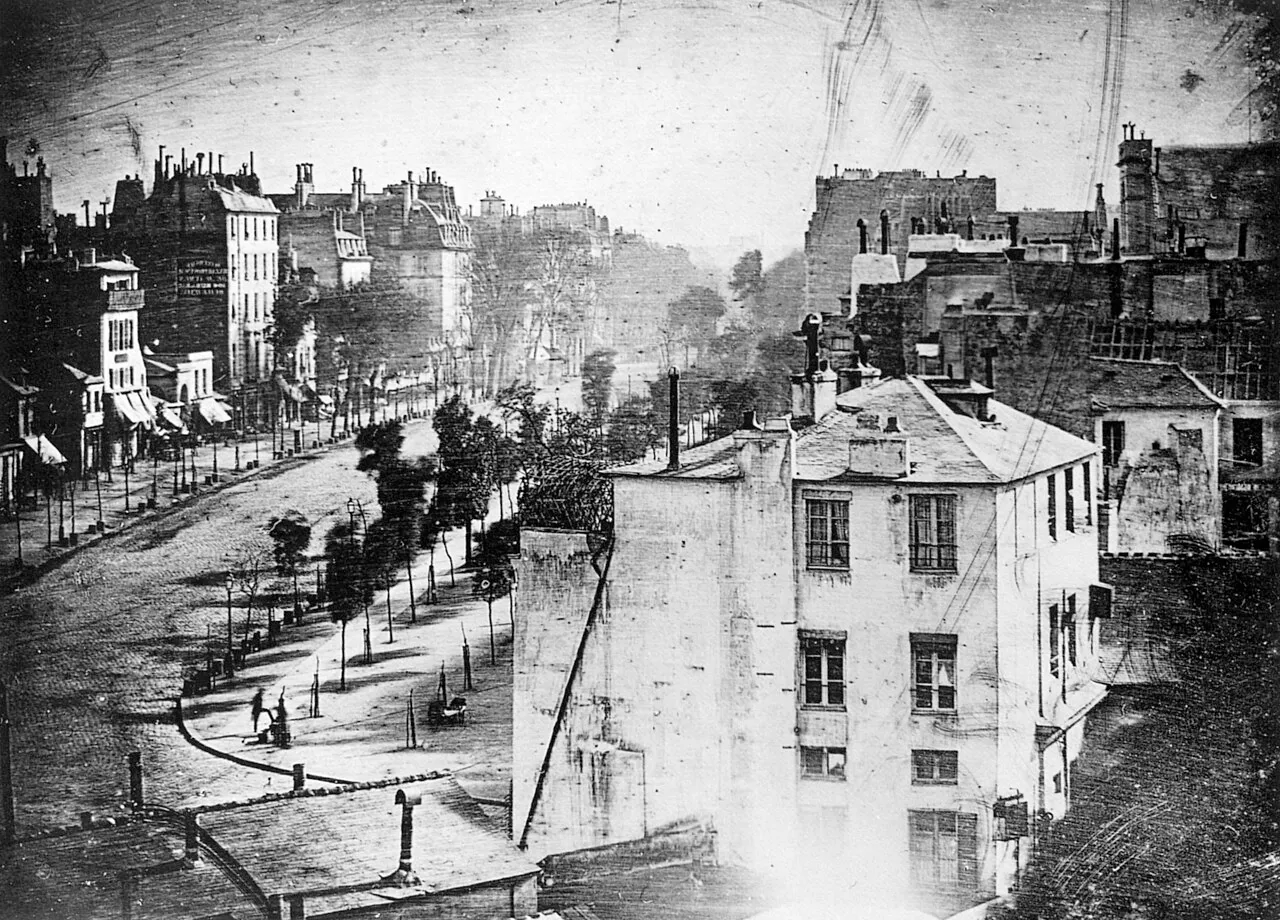
Louis Daguerre, 1838 · Public domain · source ↗ 1838
Boulevard du Temple: the first people in a photograph
Daguerre's view of a Paris boulevard needed minutes of exposure, so the moving traffic vanished. A man having his boots polished stood still long enough to appear.
Related: The daguerreotype
Back to the timeline19 August 1839
The daguerreotype is given to the world
The French state bought Daguerre's process and published its details at a joint meeting of the Academies of Science and Fine Arts. The date is now kept as World Photography Day.
Related: The daguerreotype
Back to the timeline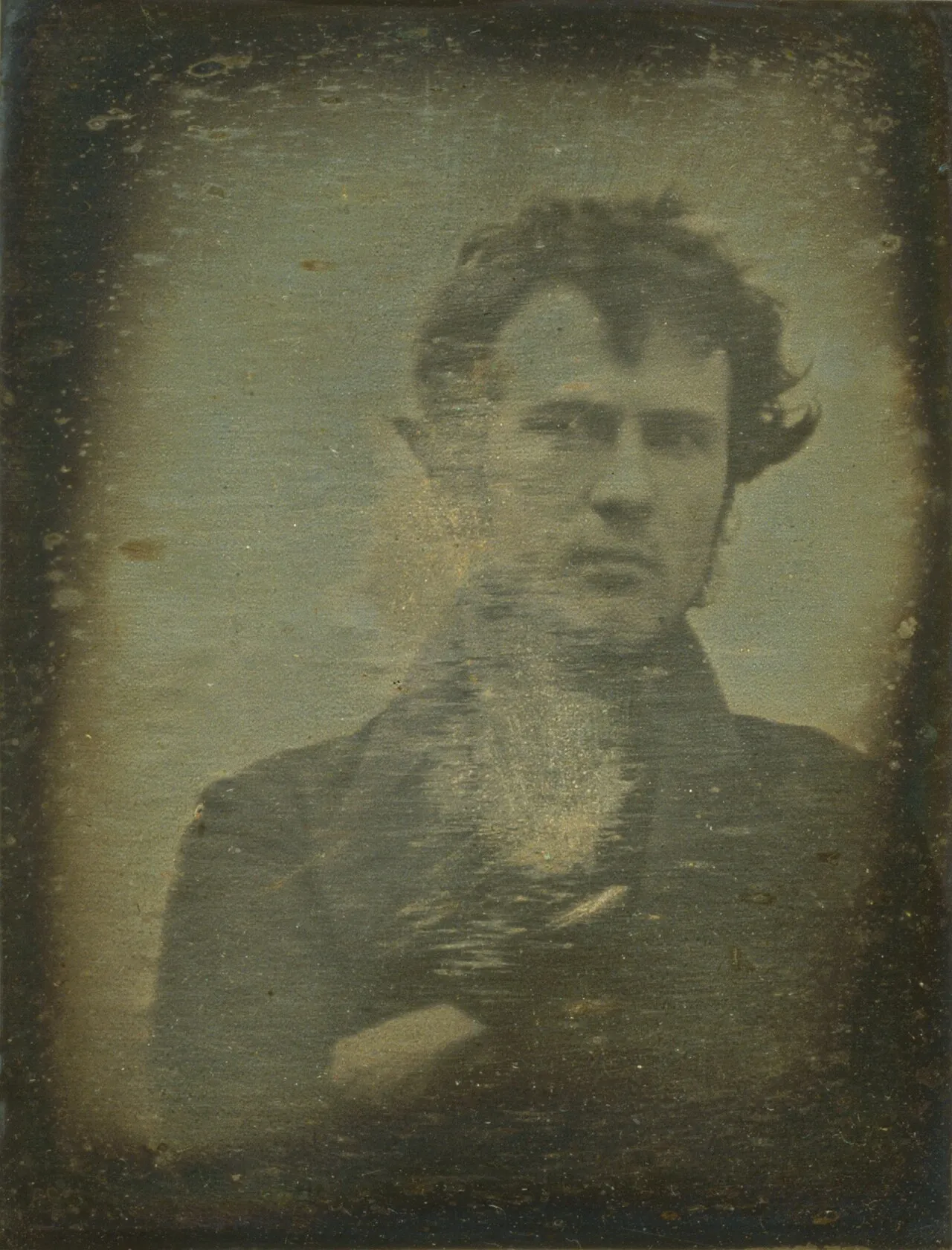
Robert Cornelius, 1839. Library of Congress · Public domain · source ↗ Late 1839
Robert Cornelius's self-portrait
In Philadelphia, Cornelius sat in front of his own camera for several minutes. It is the earliest surviving photographic self-portrait, and one of the first American portraits.
Back to the timeline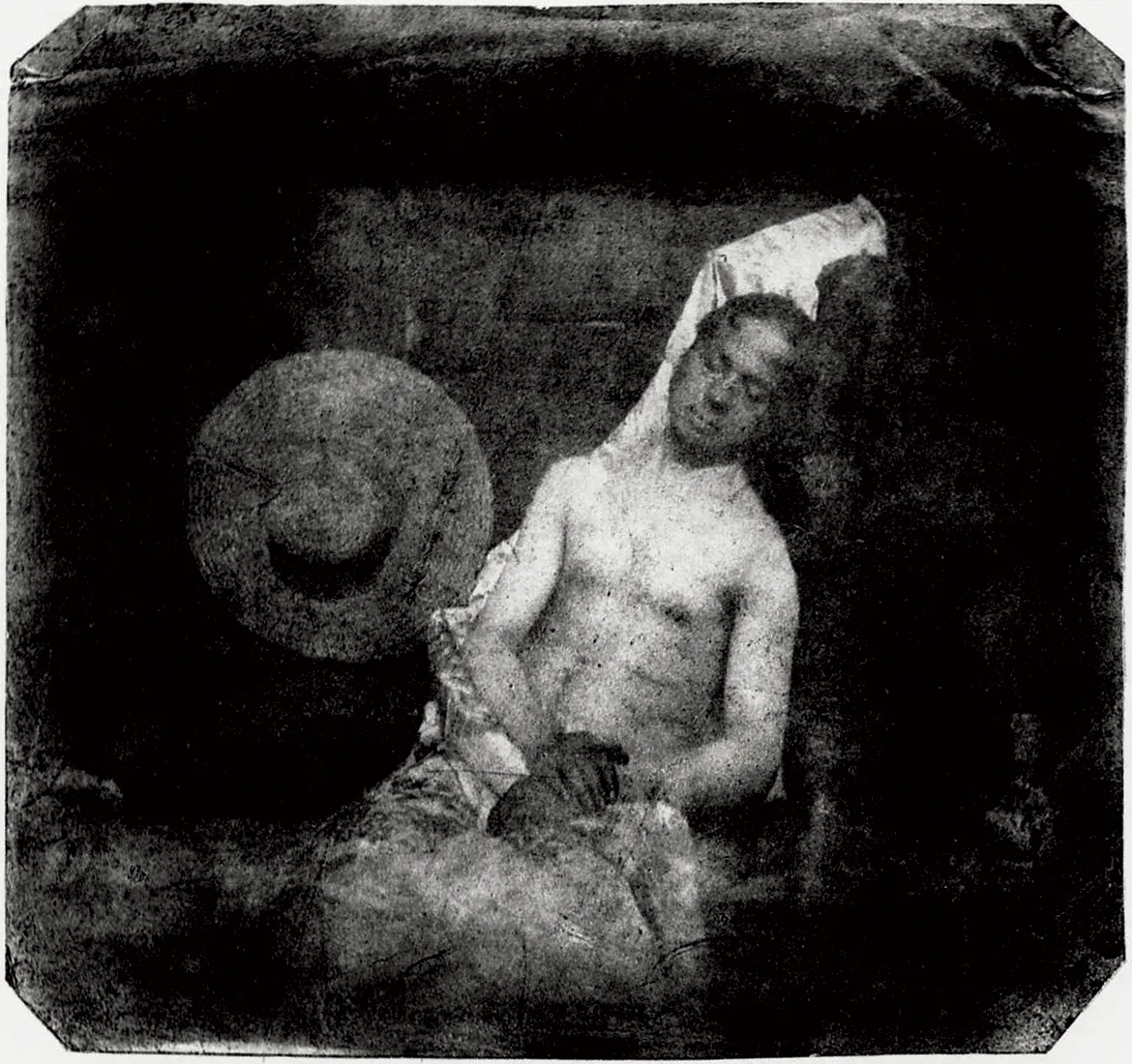
Hippolyte Bayard, 1840. Société française de photographie · Public domain · source ↗ 18 October 1840
Bayard's Self-Portrait as a Drowned Man
Hippolyte Bayard, who had his own paper process, staged himself as a suicide in protest that France had honoured Daguerre and ignored him. It is often called the first staged photograph.
Back to the timeline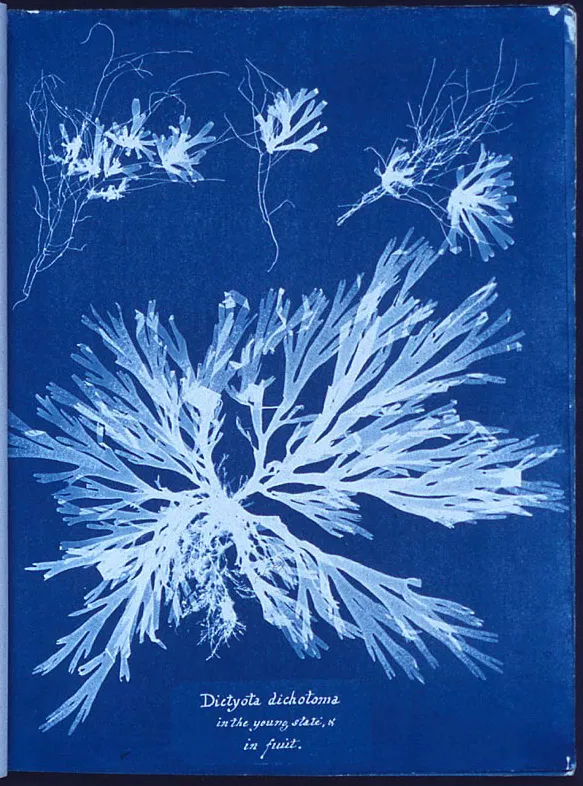
Anna Atkins, from Photographs of British Algae, 1843–53 · Public domain · source ↗ 1843
Anna Atkins's cyanotype book of algae
Atkins laid British seaweeds on cyanotype paper to make Photographs of British Algae: Cyanotype Impressions, issued in parts from 1843. It is often called the first book illustrated with photographs.
Related: The cyanotype
Back to the timeline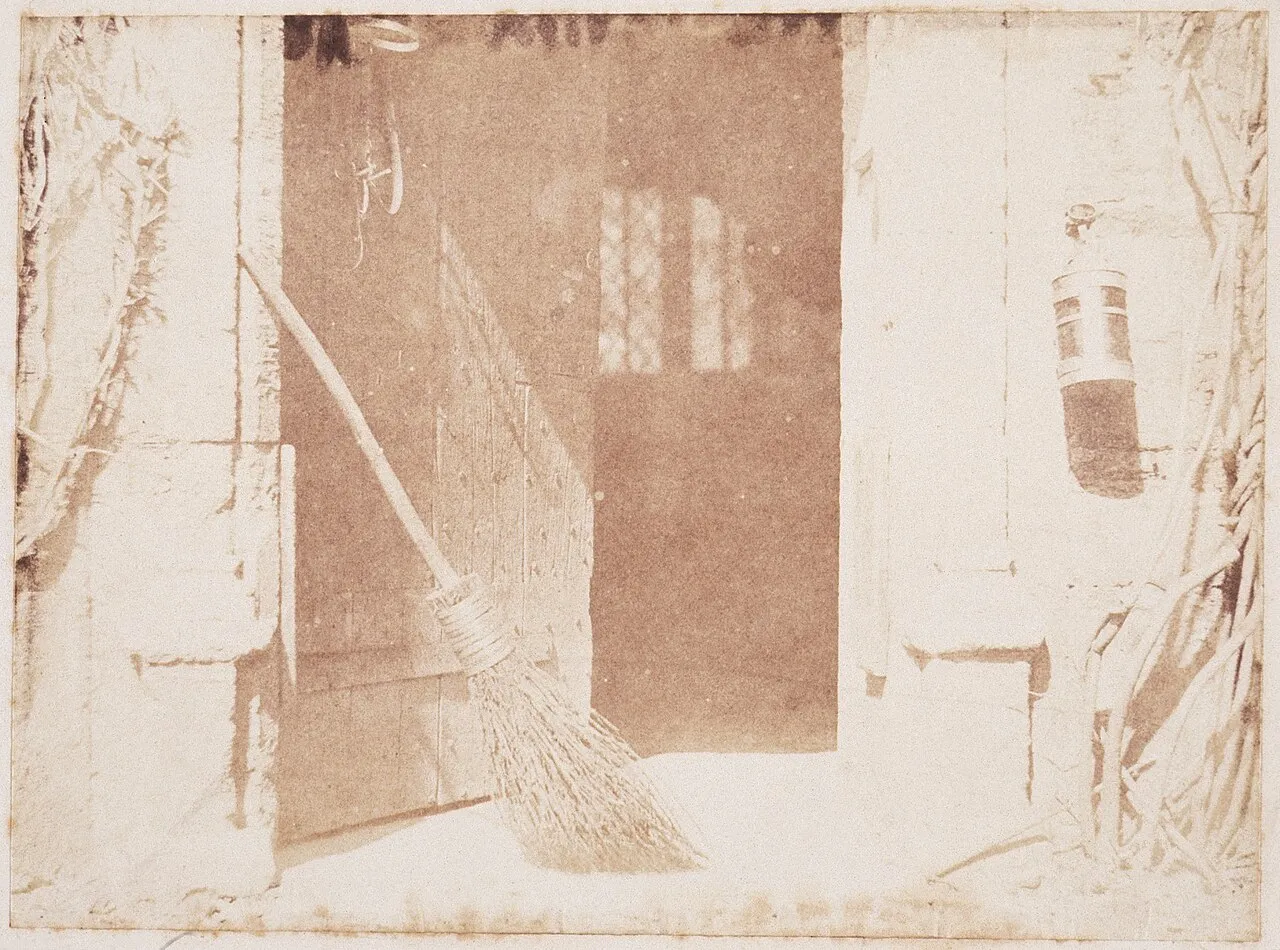
William Henry Fox Talbot, The Open Door, 1844. Los Angeles County Museum of Art · Public domain · source ↗ 1844–46
The Pencil of Nature
Talbot published his calotypes in six parts with an explanatory text: the first commercially published book illustrated with photographs, and an early argument for what photography could do.
Related: Talbot's photogenic drawing and the calotype negative
Back to the timeline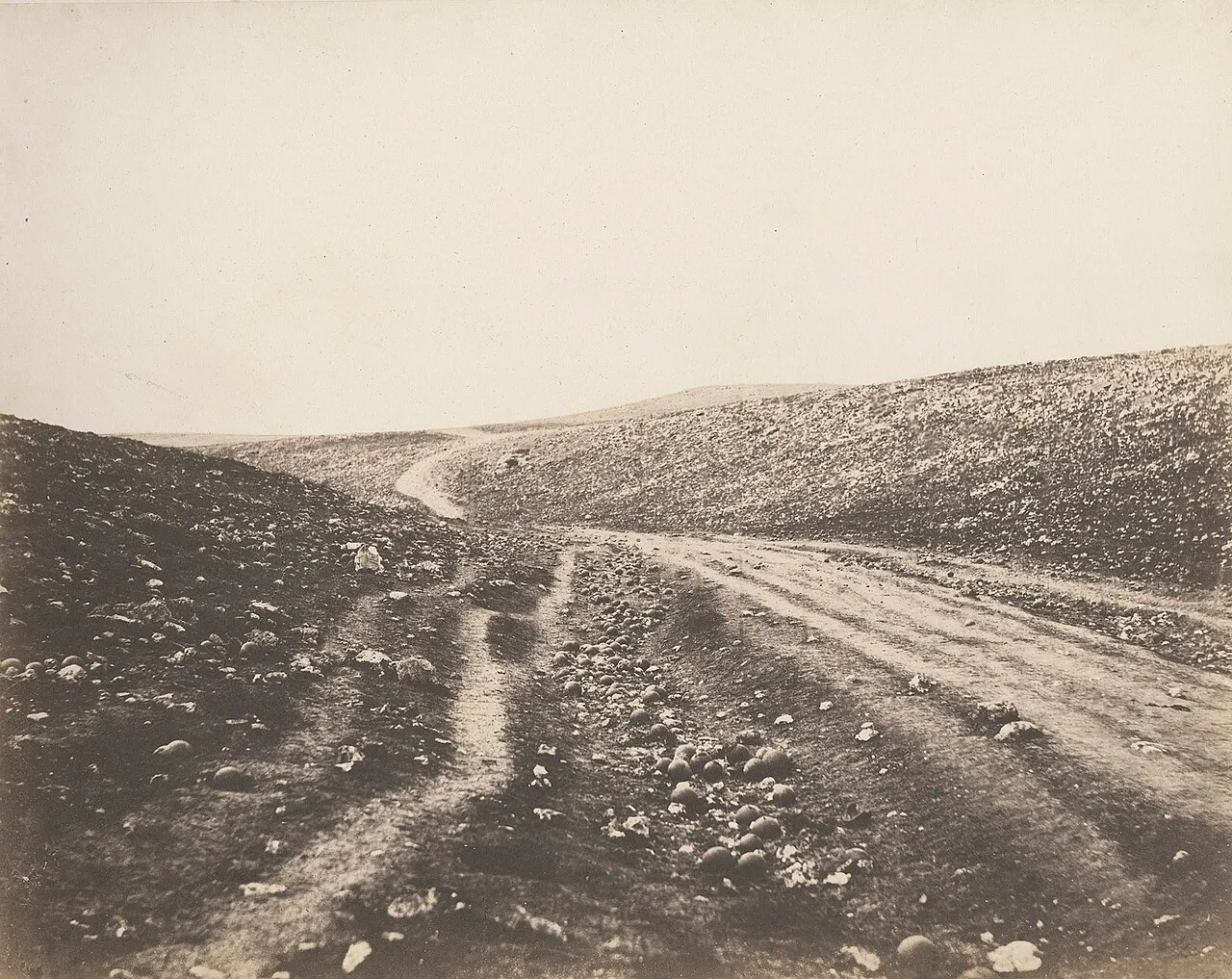
Roger Fenton, 1855 · Public domain · source ↗ 1855
Fenton photographs the Crimean War
Roger Fenton spent months in the Crimea with a horse-drawn darkroom van. Slow wet plates meant no action, but The Valley of the Shadow of Death, a road strewn with cannonballs, became one of the first famous war photographs.
Related: The wet collodion process
Back to the timeline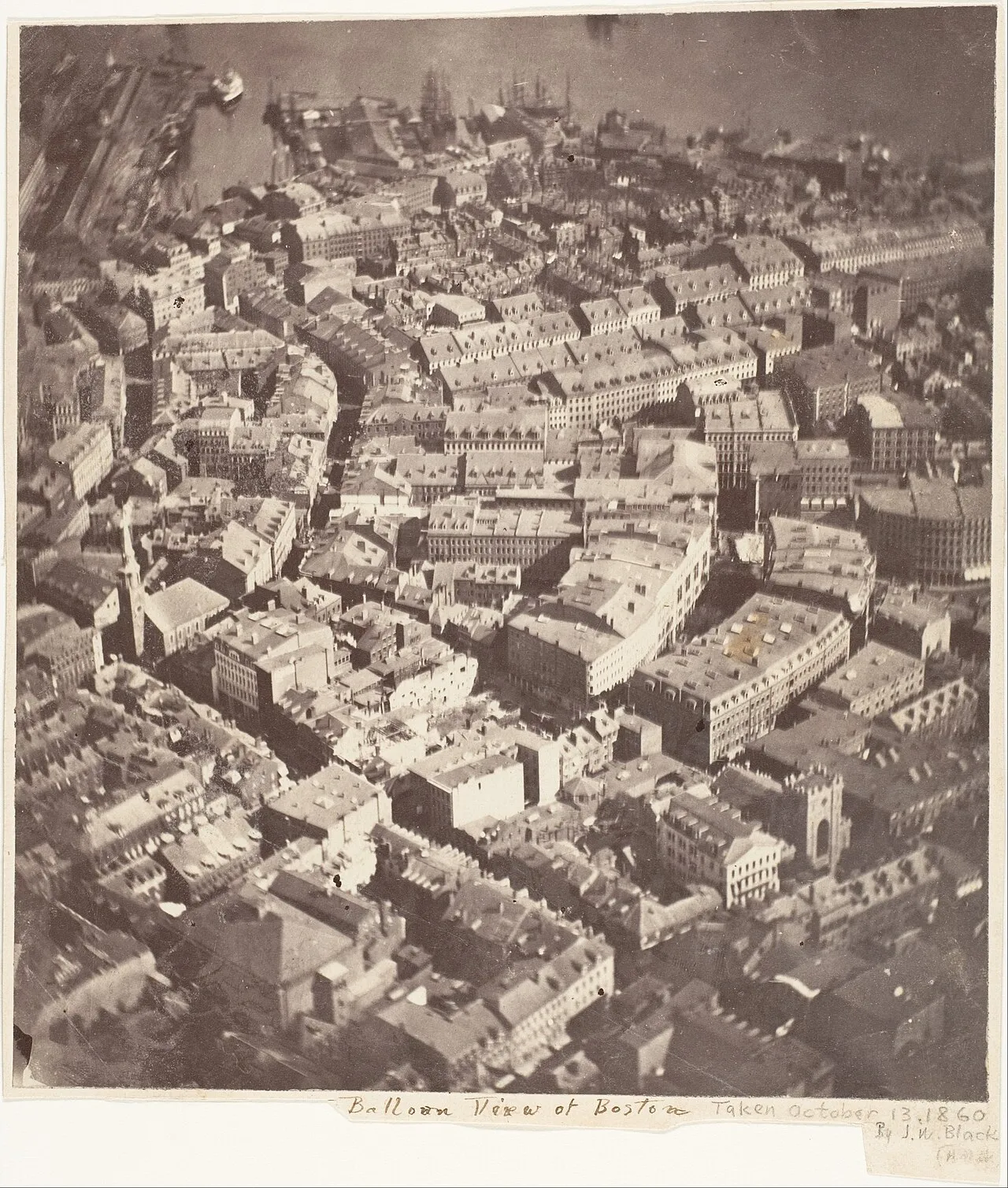
James Wallace Black, Boston, as the Eagle and the Wild Goose See It, 1860. The Metropolitan Museum of Art · Public domain · source ↗ 1858
Nadar's photographs from a balloon
The Paris photographer Nadar took the first aerial photographs from a tethered balloon above Petit-Bicêtre. None survive; the oldest surviving aerial photograph is James Wallace Black's view of Boston, 1860.
Related: The wet collodion process
Back to the timeline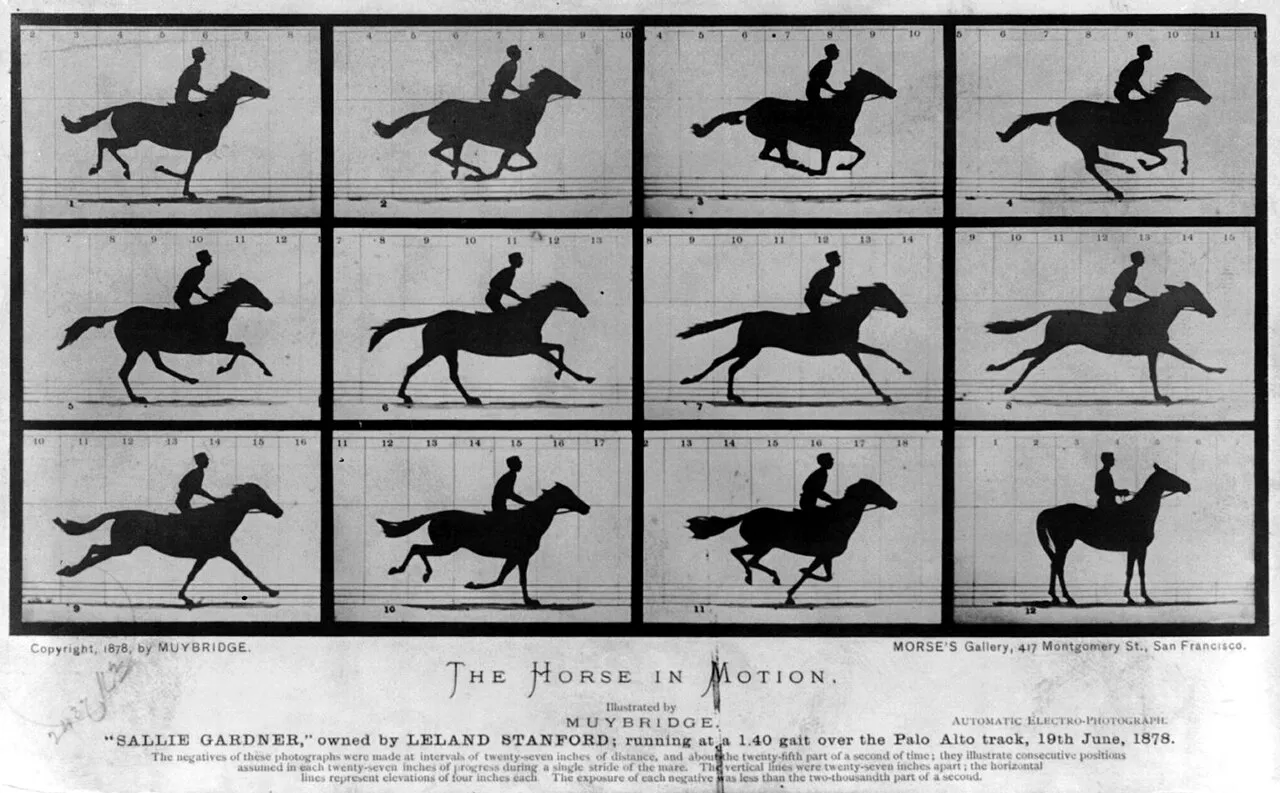
Eadweard Muybridge, 1878. Library of Congress · Public domain · source ↗ 1878
The Horse in Motion
Eadweard Muybridge's row of cameras, fired by trip wires, showed that a galloping horse lifts all four hooves off the ground at once, which no painter had ever drawn.
Related: The gelatin dry plate
Back to the timeline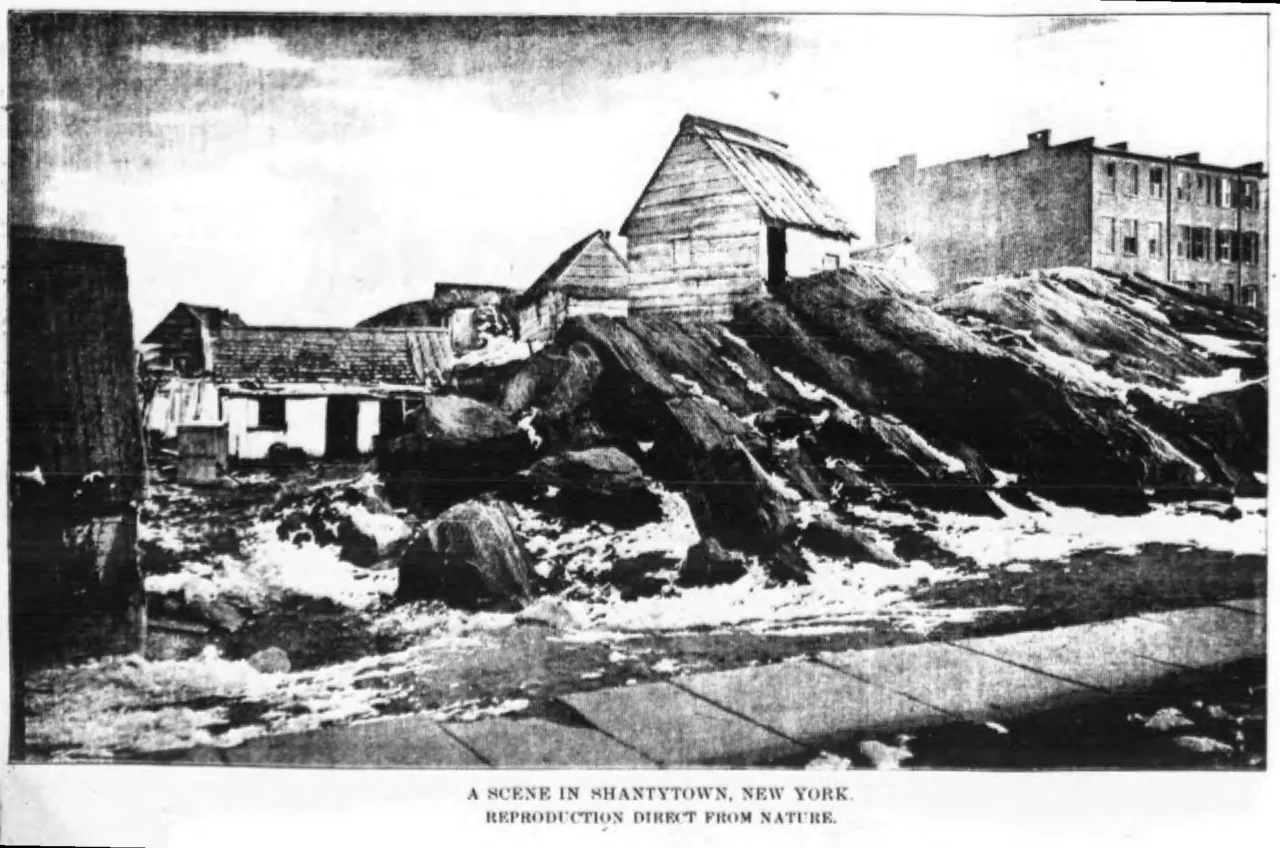
The Daily Graphic, New York, 4 March 1880 · Public domain · source ↗ 4 March 1880
A Scene in Shantytown: the first halftone in a newspaper
The New York Daily Graphic printed a photograph of shacks in Manhattan as a halftone, using a coarse screen. It took another two decades before halftones were common in newspapers.
Related: Halftone printing
Back to the timeline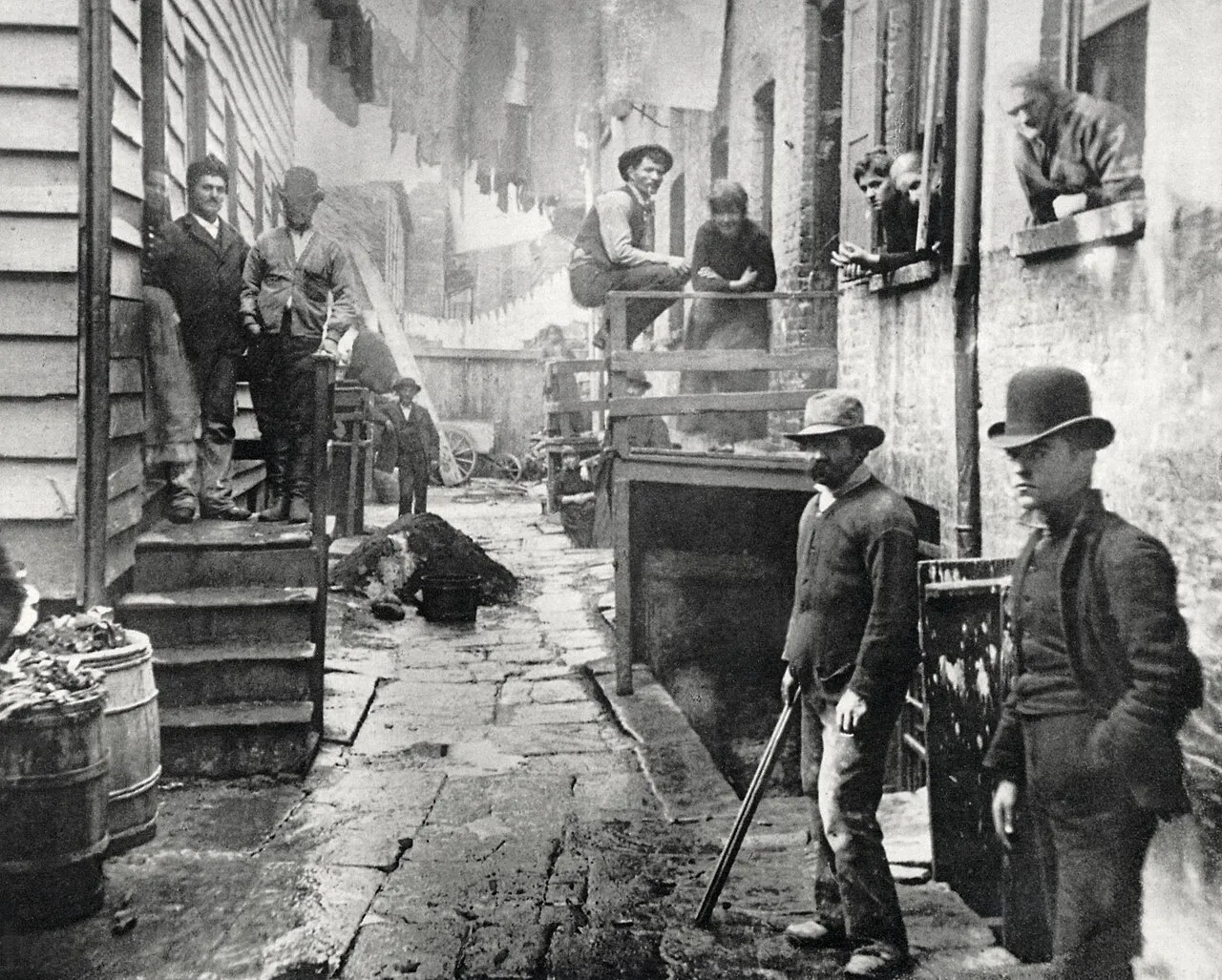
Jacob Riis, Bandits' Roost, about 1888 · Public domain · source ↗ 1890
How the Other Half Lives
Jacob Riis used flash powder to photograph New York's tenements at night, and published the pictures as a book. It helped bring about housing reform and is a founding work of documentary photography.
Related: Magnesium flash powder
Back to the timeline23 November 1936
The first issue of LIFE
Henry Luce relaunched LIFE as a weekly picture magazine, with Margaret Bourke-White's photograph of the Fort Peck Dam on the cover. Picture magazines defined photojournalism for decades.
Related: 135 film and the 24 × 36 mm frame
Back to the timeline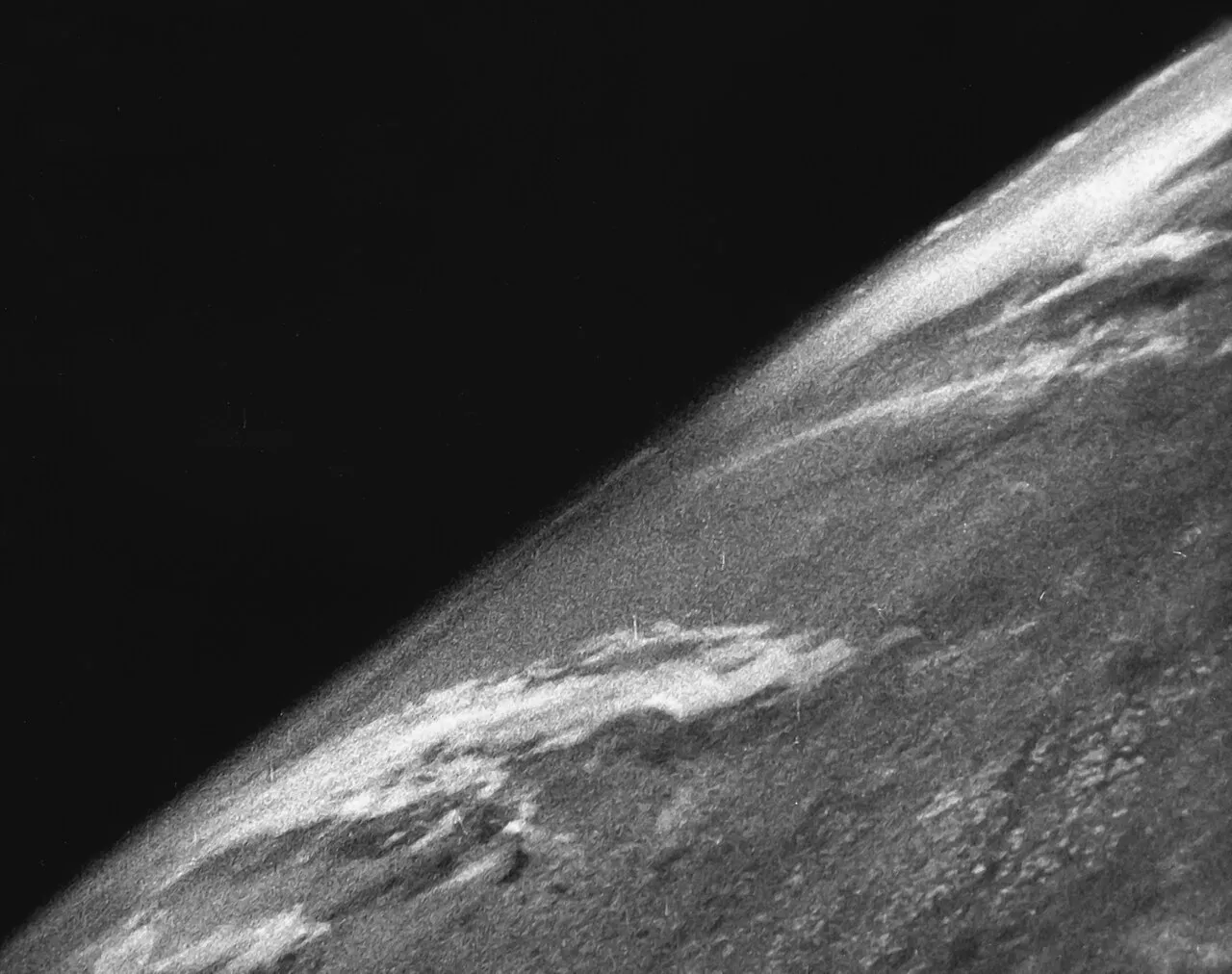
U.S. Army / Applied Physics Laboratory, White Sands, 24 October 1946 · Public domain · source ↗ 24 October 1946
The first photograph of Earth from space
A 35mm movie camera on a captured V-2 rocket launched from White Sands, New Mexico, filmed the Earth from about 105 km up. The film survived in a steel cassette when the rocket crashed.
Related: 35mm cine film
Back to the timeline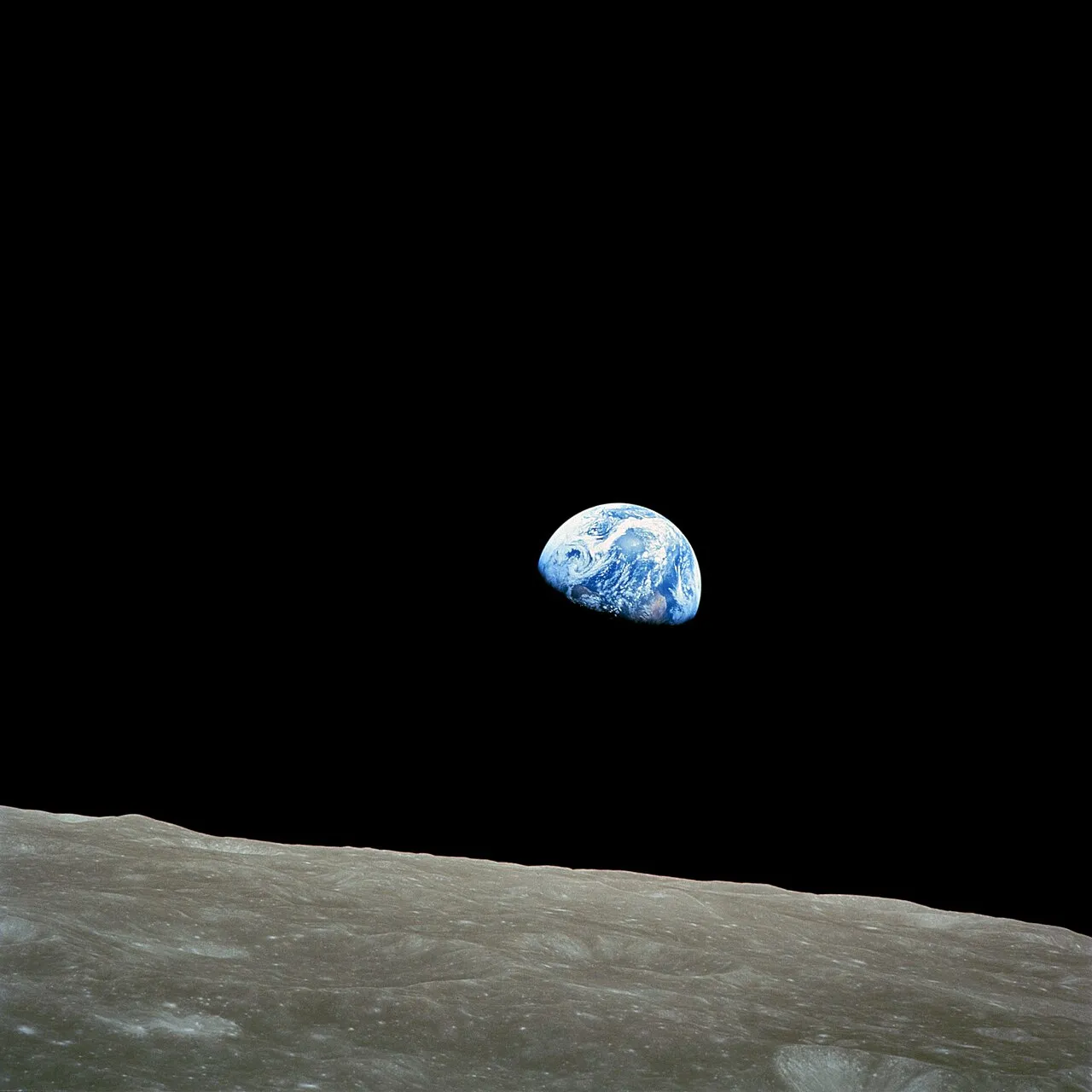
William Anders, Apollo 8, 1968. NASA · Public domain · source ↗ 24 December 1968
Earthrise
Bill Anders photographed the Earth rising over the Moon from Apollo 8 with a Hasselblad and colour film. It became one of the most reproduced photographs ever made.
Back to the timeline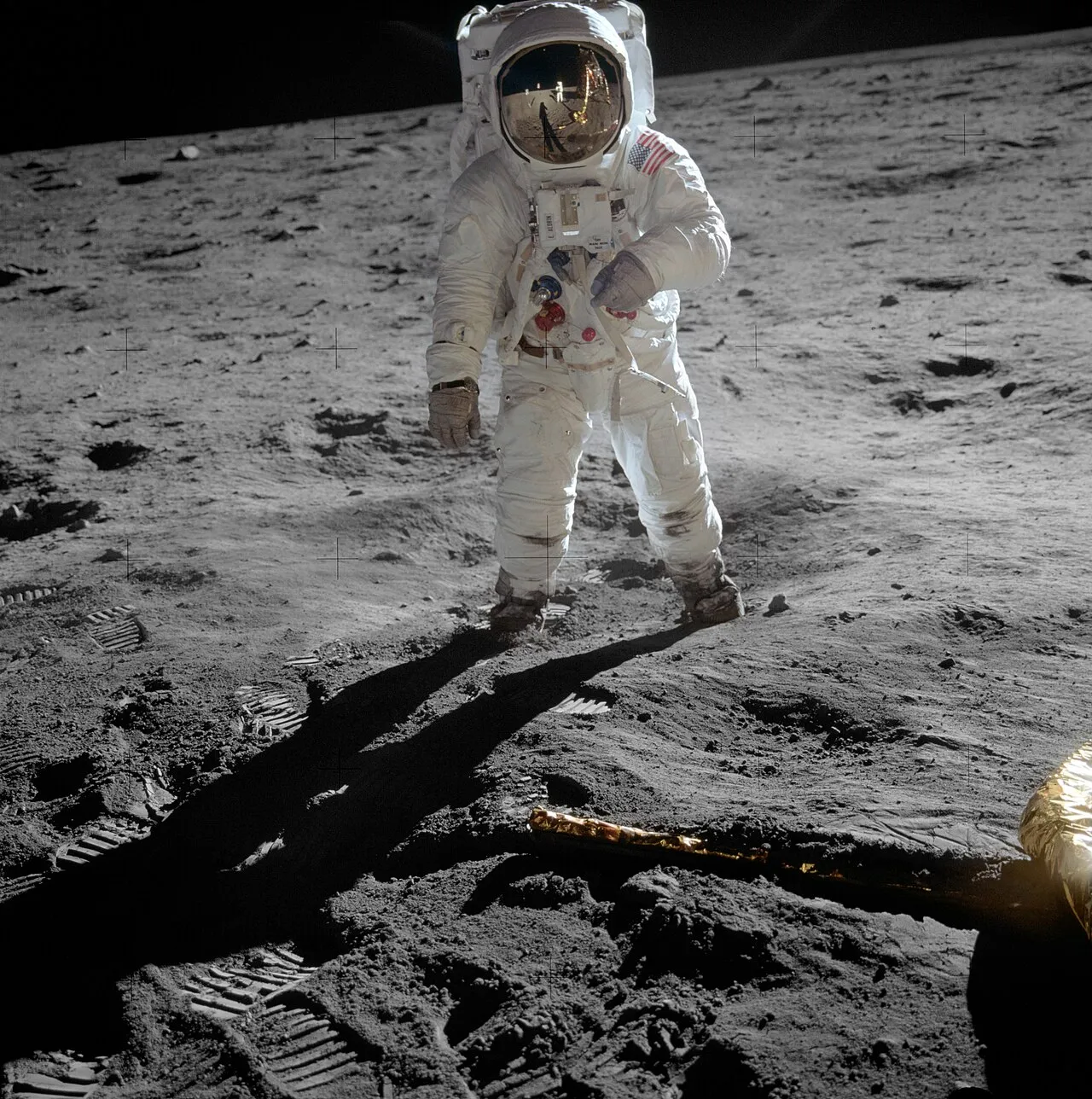
Neil Armstrong, Apollo 11, 1969. NASA · Public domain · source ↗ 20 July 1969
Hasselblads on the Moon
Neil Armstrong and Buzz Aldrin photographed the Apollo 11 landing with modified Hasselblad cameras. Most pictures of an astronaut on the Moon from that mission show Aldrin, because Armstrong held the camera.
Related: The Hasselblad system camera
Back to the timeline6 October 2010
Instagram is launched
A free iPhone app for square photos with filters gained a million users in two months. It made sharing photographs the main way many people use them.
Related: Online photo sharing
Back to the timeline19 January 2012
Kodak files for bankruptcy
The company that built the first digital camera in 1975 filed for Chapter 11 protection after film sales collapsed. It emerged in 2013 as a much smaller firm.
Back to the timelineApril 2023
An AI image wins a photography prize
Boris Eldagsen revealed that his prize-winning entry to the Sony World Photography Awards was made with AI, and declined the prize to start a debate on what counts as a photograph.
Related: Generative AI and Content Credentials
Back to the timeline


