The wet collodion process
1851 (published by Frederick Scott Archer)
A sticky collodion film on glass, sensitised and exposed while still wet, gave sharp glass negatives in seconds. It made the daguerreotype and the calotype obsolete within a decade.
How it began
In 1851 the London sculptor Frederick Scott Archer published a way to hold light-sensitive silver on glass: coat it with collodion, a syrupy solution of nitrated cotton in ether and alcohol. Archer did not patent it, so anyone could use it.
How it works
The photographer pours collodion containing iodide salts over a clean glass plate and dips it in silver nitrate, forming silver iodide in the film. The plate must be exposed and developed within about ten minutes, while still wet, because the collodion loses sensitivity as it dries. The result is a glass negative as sharp as a daguerreotype, which prints any number of times on albumen paper. On black-backed glass (ambrotype) or a thin japanned iron plate (tintype) the negative looks positive.
Why it mattered
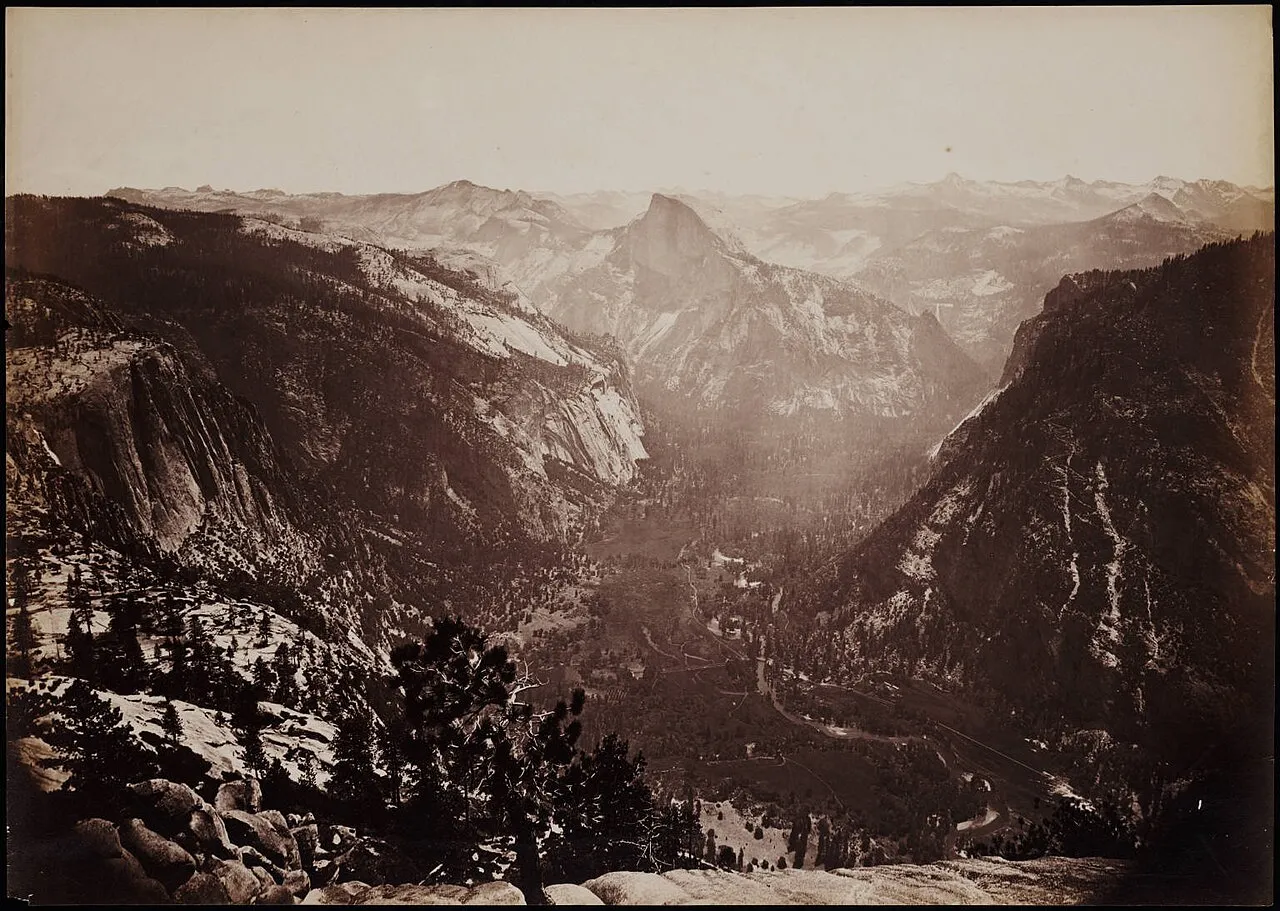
Collodion combined the detail of the daguerreotype with the reproducibility of the calotype, and exposures fell to seconds. For thirty years it was photography: studio portraits, cartes de visite, war photography, and landscapes from the American West.
Limits and what replaced it
Photographers had to carry a darkroom wherever they went: tents, wagons and boxes of chemicals. The gelatin dry plate of the 1870s could be made in a factory, stored for months and exposed in a fraction of a second.
Today
Wet-plate collodion is a living art: photographers make tintypes and ambrotypes in portable darkrooms.
Sources
- Wikipedia: Collodion process ↗
- Eder, ch. XLII–XLVIII (pp. 342–376)