The carte de visite
1854 (Disdéri's patent); craze from 1859
Small portrait prints mounted on visiting-card-sized board, made several at a time on one plate. They were cheap enough to collect, trade and send.
How it began
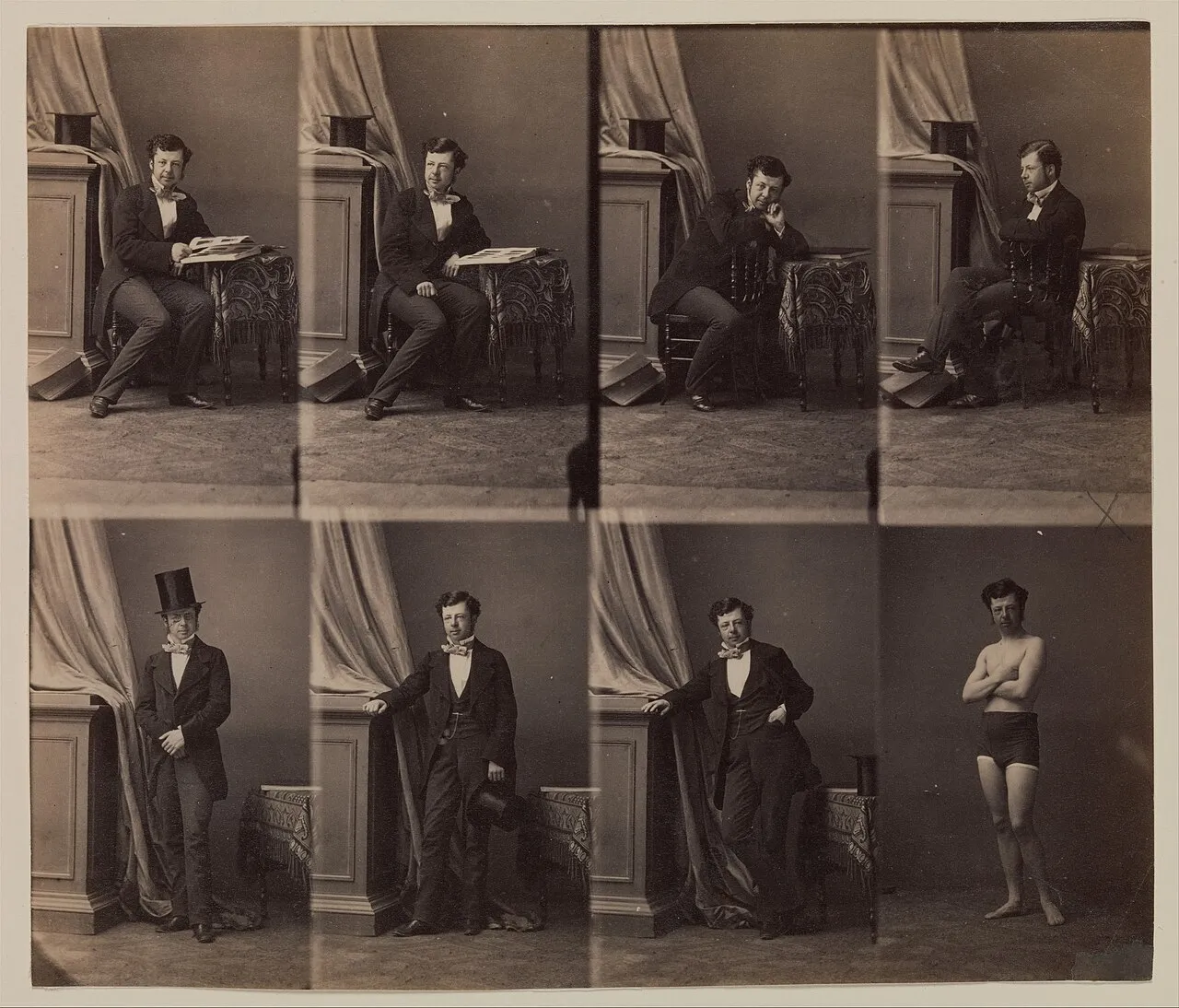
In 1854 André-Adolphe-Eugène Disdéri patented a camera with several lenses that took eight small portraits on one glass plate. One print could then be cut into eight cards.
How it works
The wet collodion negative was printed on albumen paper, cut up and pasted onto stiff cards the size of a visiting card. Sharing the cost of one plate between eight pictures made each one cheap.
Why it mattered
It turned portraits into something people bought by the dozen, swapped and kept in albums. Pictures of famous people were sold in huge numbers, an early celebrity image trade.
Limits and what replaced it
The larger cabinet card took over in the 1870s, and amateur snapshots after 1888 made studio cards less special.
Today
Collected by historians and dealers; the idea lives on in social media profile pictures.