The ambrotype and the tintype
1854 (ambrotype patent); 1856 (tintype patent)
Thin collodion negatives that look positive against a dark backing: on glass (ambrotype) or on a black iron plate (tintype). Cheap, quick portraits for everyone.
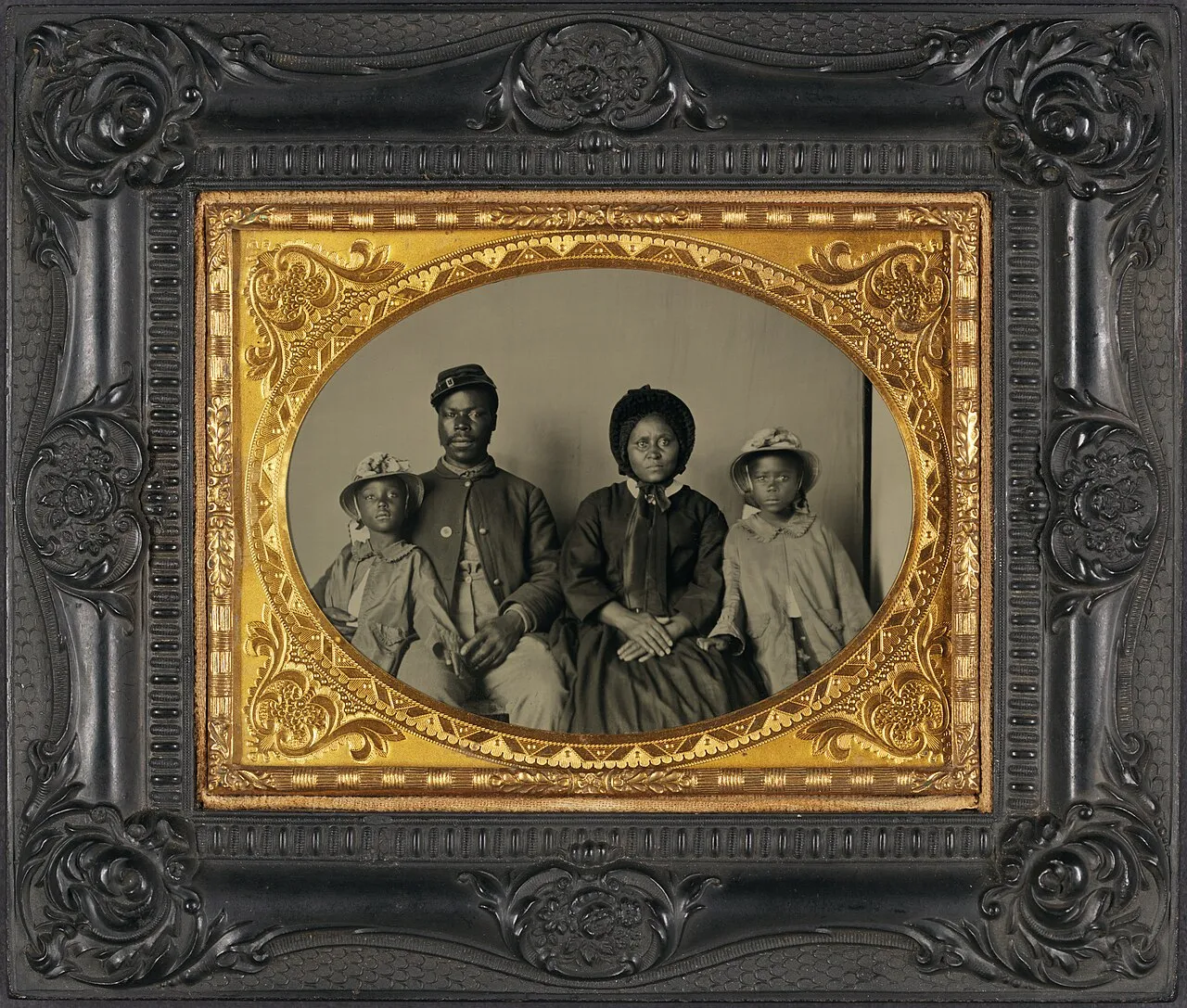
How it began
The wet collodion process made sharp glass negatives in seconds. Photographers soon found that a thin, underexposed collodion negative looks like a positive when seen against black. James Ambrose Cutting patented a version on glass in 1854, and Hamilton Smith one on thin iron plates in 1856.
How it works
The silver image in collodion looks pale grey by reflected light. Backed with black varnish, velvet or a black-enamelled metal plate, the clear shadows show dark and the silver highlights show light, so the negative reads as a positive.
Why it mattered
They were much cheaper than daguerreotypes and needed no printing. Tintypes were tough enough to post or carry, and itinerant photographers made them at fairs and battlefields. For many families they were the first portraits they could afford.
Limits and what replaced it
Each one was unique and could not be copied, and the process meant a portable darkroom. Gelatin dry plates and paper prints made them obsolete by around 1900, until wet-plate enthusiasts revived them in the 2000s.
Today
Wet-plate photographers make ambrotypes and tintypes again at fairs and in studios, prized for being one of a kind.