The albumen print
1850 (Blanquart-Evrard)
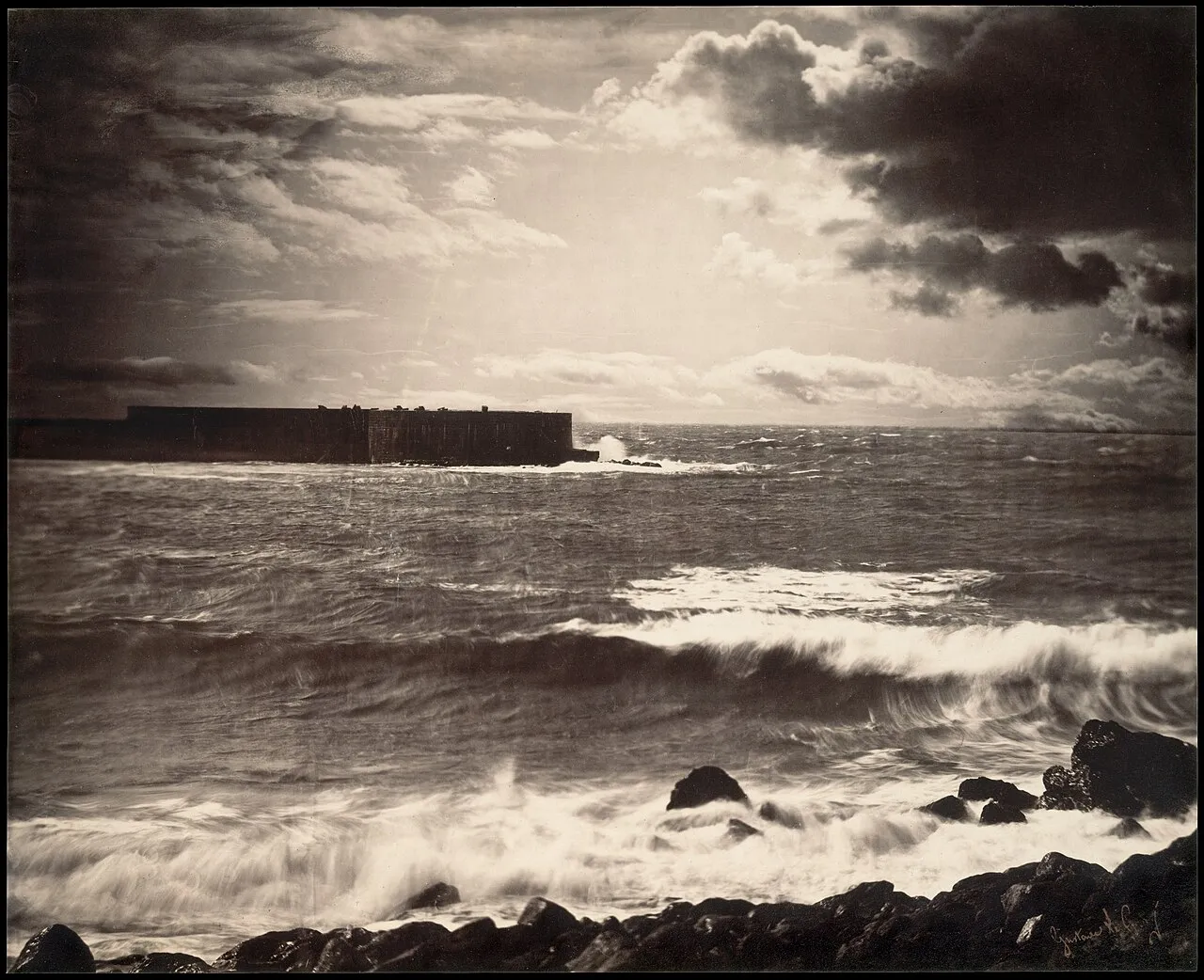
Paper coated with egg white and silver salts gave sharp, glossy prints from glass negatives, and became the main way photographs were printed for forty years.
How it began
Talbot’s salted paper prints were soft, because the image sank into the paper fibres. In 1850 Louis Désiré Blanquart-Evrard coated paper with egg white first, so the image sat in a smooth layer on top.
How it works
The albumen layer holds silver chloride. Pressed against a negative in sunlight, the paper darkens where light passes, with no developer needed. The print is then toned with gold and fixed with fixer.
Why it mattered
Paired with sharp wet collodion negatives, it gave fine detail cheaply and in quantity. Most nineteenth-century photographs that survive are albumen prints, including the carte de visite.
Limits and what replaced it
Albumen prints yellow and crack with age. Gelatin silver papers, which could be developed and printed by artificial light, replaced them by the 1890s.
Today
A handful of alternative-process printers still make albumen prints.