Talbot's photogenic drawing and the calotype negative
1835 (oldest surviving negative); 1839 (announced); 1841 (calotype patented)
William Henry Fox Talbot made paper negatives from which any number of positive prints could be made. That negative–positive principle defined photography for 150 years.
How it began
William Henry Fox Talbot, an English scientist and landowner, could not draw well with a camera lucida on holiday in Italy in 1833. He decided to make the image draw itself. By 1835 he was coating writing paper with salt and silver nitrate and making small camera pictures at Lacock Abbey, including the lattice window that is the oldest surviving camera negative. When Daguerre’s invention was announced in January 1839, Talbot rushed his own process before the Royal Institution and the Royal Society.
How it works
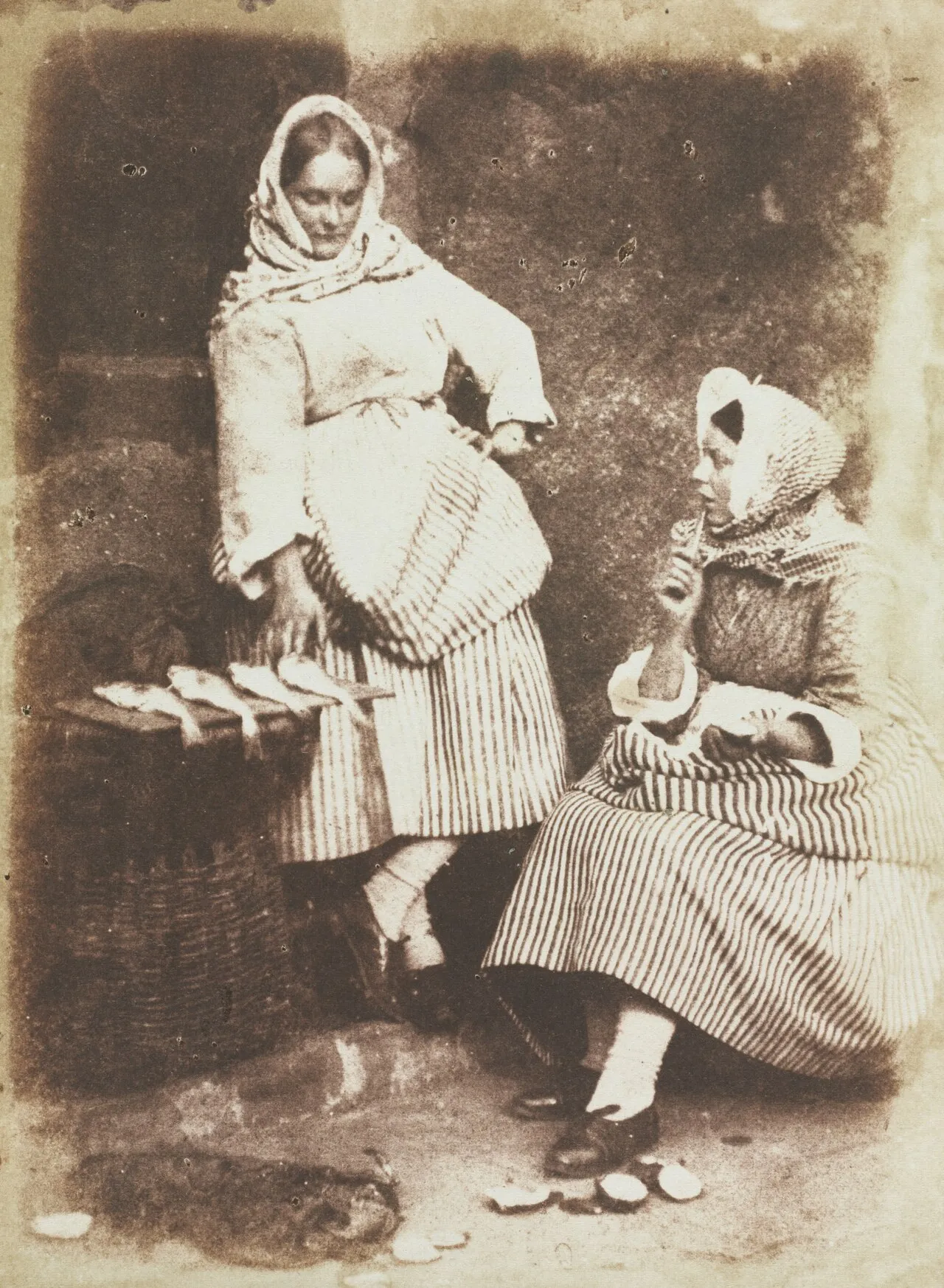
Talbot’s early “photogenic drawings” were printed out by light until visible, which was slow. In 1840 he found that paper sensitised with silver iodide and gallic acid could record an invisible latent image in a short exposure, which was then developed. He patented this calotype (from the Greek for “beautiful”) in 1841. The result is a negative on paper. Waxed or oiled to make it translucent, it is printed by sunlight onto a second sensitised sheet to give a positive, and the negative can be printed again and again.
Why it mattered
Talbot’s negative–positive principle, not Daguerre’s one-off plate, became the basis of photography until the digital era. It made photographs reproducible, and his Pencil of Nature (1844–46) was among the first books illustrated with them. Development, too, became the key to every fast process that followed.
Limits and what replaced it
Paper fibres made calotypes soft compared with daguerreotypes, and Talbot’s patents restricted their use in England. Glass negatives made with collodion combined sharpness with reproducibility and replaced the calotype in the 1850s.
Today
Every film negative and print follows Talbot's negative–positive idea.
Sources
- Primary source The Pencil of Nature (Project Gutenberg) ↗
- The Correspondence of William Henry Fox Talbot ↗
- Wikipedia: Calotype ↗
- Eder, ch. XXXVII (p. 316)