The stereograph
1849 (Brewster’s viewer); 1851 (Great Exhibition)
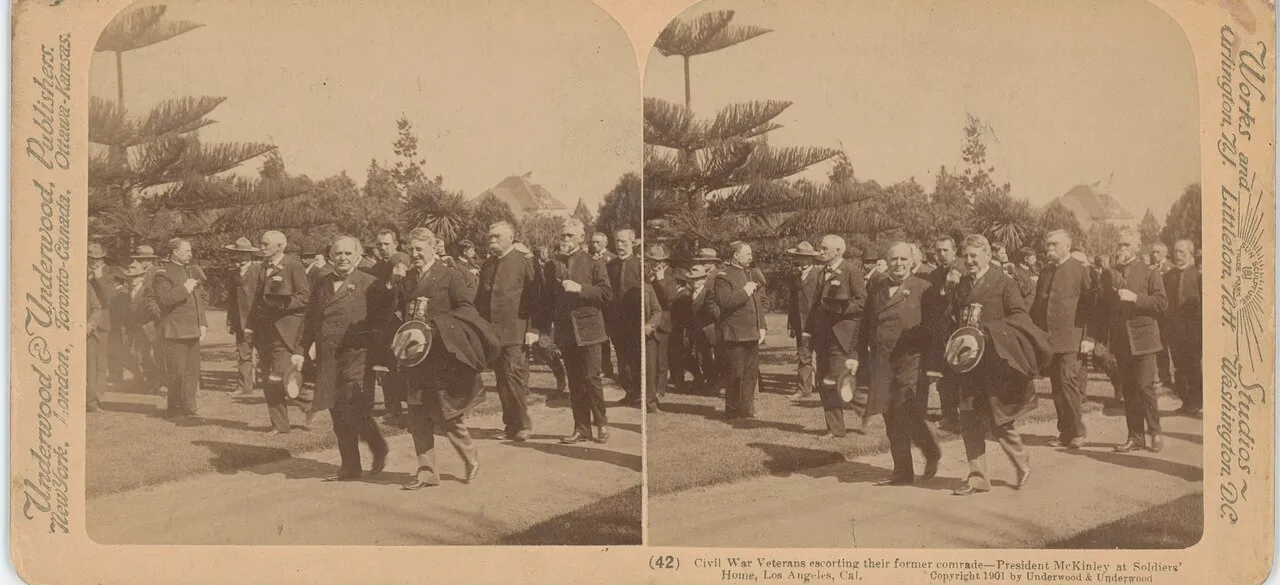
Two photographs taken a few centimetres apart and seen through a viewer, one per eye, appear in three dimensions. Millions were sold for home viewing.
How it began
In 1838 Charles Wheatstone showed that two slightly different drawings, one for each eye, combine into a 3D image. Photography made such pairs easy. David Brewster’s compact lens viewer of 1849, shown at the Great Exhibition of 1851, started a craze.
How it works
A camera with two lenses, about as far apart as human eyes, takes two pictures at once. In the viewer each eye sees only one, and the brain fuses them into depth.
Why it mattered
Stereo cards of distant cities, wars and wonders were sold by the million to middle-class homes, and they were the first mass market for photographs. Huge archives of them survive.
Limits and what replaced it
Viewing needed a device and was solitary. Cinema, halftone magazines and television replaced it, though the idea keeps returning.
Today
The same idea drives VR headsets and 3D films; vintage stereographs are rich historical records.