Halftone printing
1880 (first newspaper halftone); 1880s–90s (screens perfected)
Breaking a photograph into dots of different sizes let ordinary printing presses reproduce it, so photographs could appear in newspapers, magazines and books.
How it began
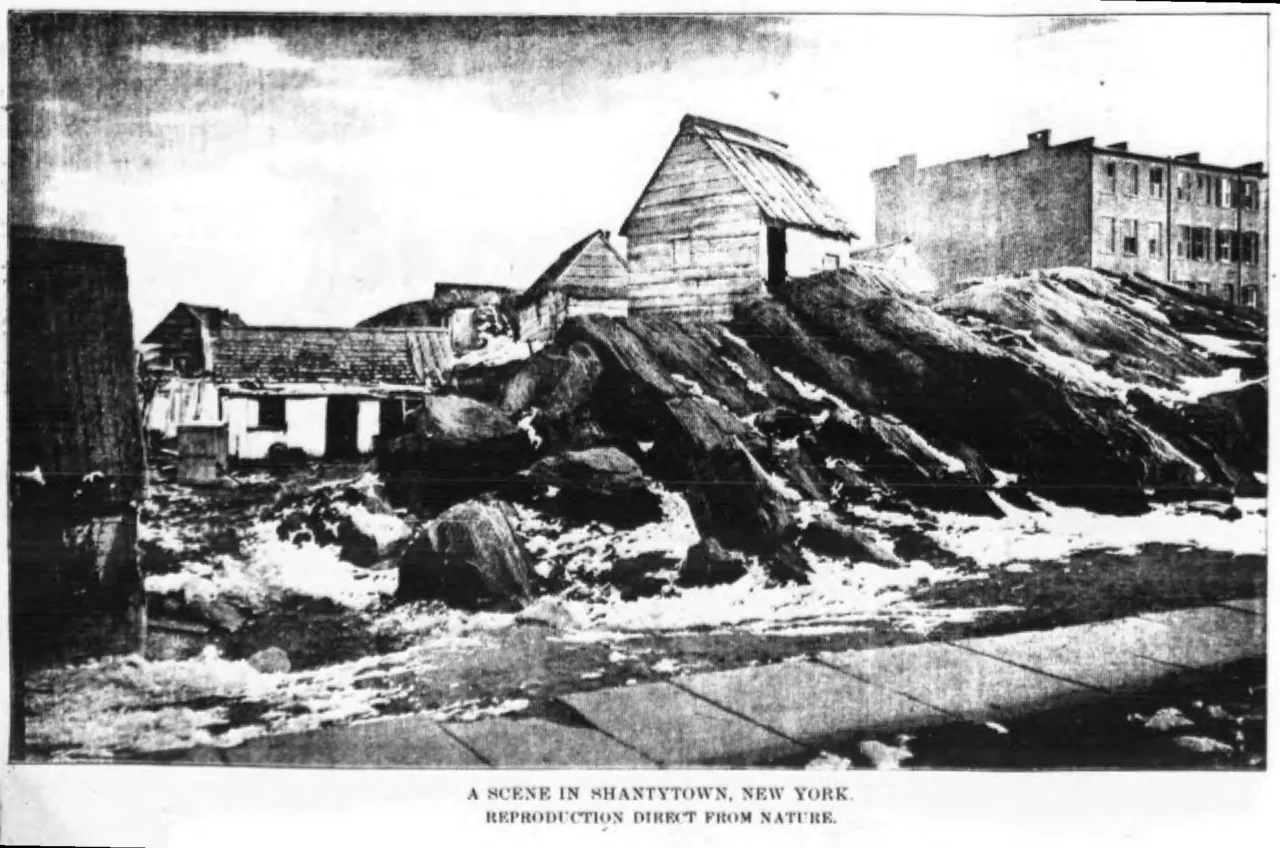
For forty years photographs reached print only by being copied into wood engravings by hand. On 4 March 1880 the New York Daily Graphic printed a photograph of a shantytown directly, using a crude screen. Through the 1880s Frederic Ives and others refined the method, and ruled glass screens made it practical.
How it works
A press prints ink or no ink; it cannot print grey. The photograph is copied through a fine screen that turns each area into dots: big dots where it is dark, small ones where it is light. From reading distance, the eye sees continuous tones.
Why it mattered
It made photographs part of the printed page, and with that came picture magazines, photojournalism and advertising photography.
Limits and what replaced it
Coarse screens lose fine detail and newsprint makes dots spread. Nothing replaced the principle; digital screening and inkjet dithering are refinements of it.
Today
Every printed photograph, from magazines to packaging, is still made of halftone dots.
Sources
- Wikipedia: Halftone ↗
- Eder, ch. LXXIV–XCIII (pp. 534–621)