The first digital image
1957 (SEAC, US National Bureau of Standards)
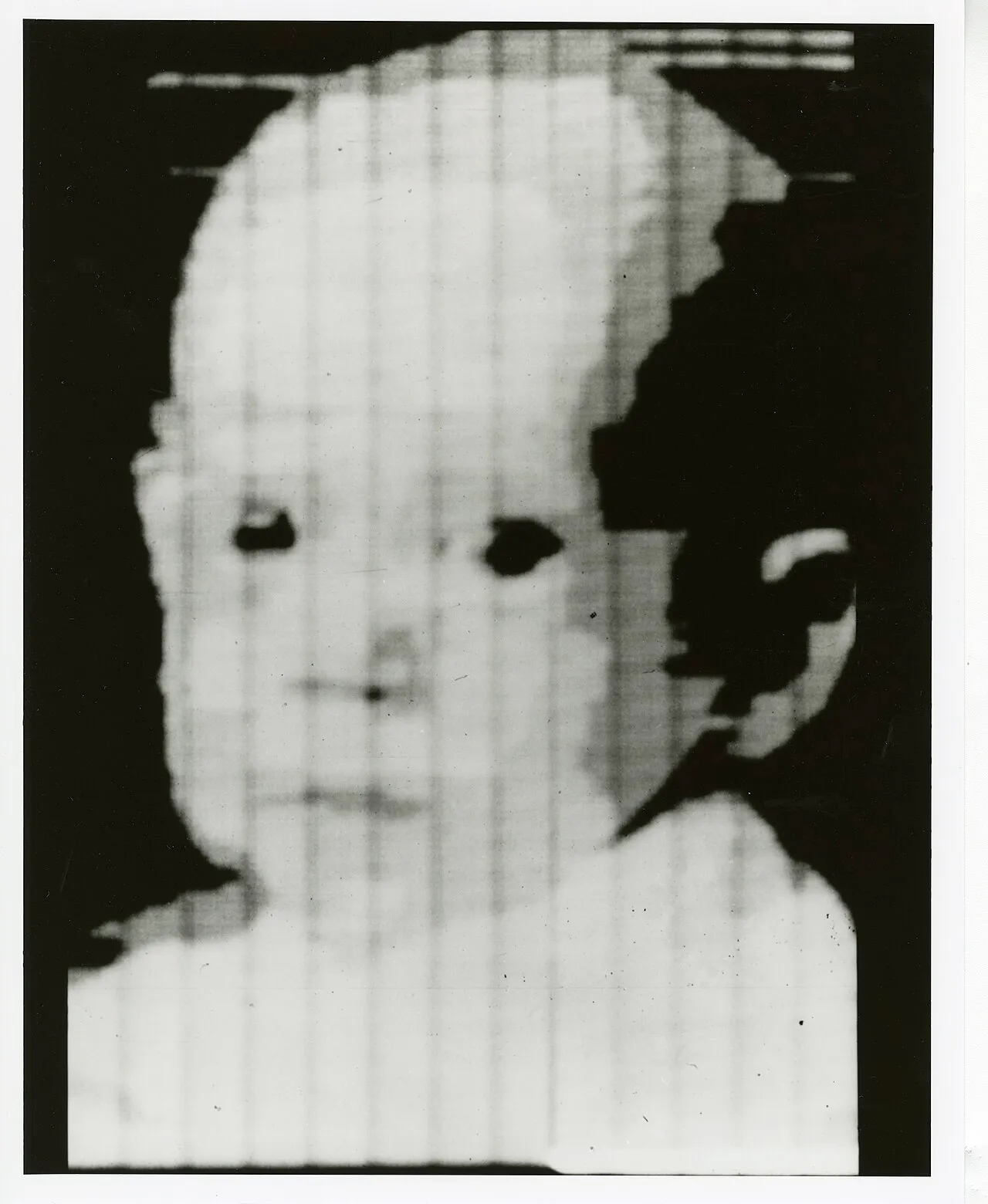
Russell Kirsch scanned a photograph of his baby son into a computer as a grid of 176×176 black and white dots: the first digital picture.
How it began
At the US National Bureau of Standards in 1957, Russell Kirsch and colleagues built a drum scanner for the SEAC computer. The first picture they scanned was a photo of his three-month-old son Walden.
How it works
The scanner measured light reflected from small areas of the photograph, one at a time, and stored each as a number: black or white. Together they made a square grid of 176×176 pixels.
Why it mattered
It showed that a picture could become data that a computer could store, change and analyse. Image processing, satellite imaging and digital photography all build on this.
Limits and what replaced it
It was a scan of an existing photo, not a camera. Electronic sensors such as the CCD made digital capture possible.
Today
The image is often cited as the ancestor of every digital photo; the pixel is now universal.