Ducos du Hauron and subtractive colour
1868 (patent); 1869 (Les couleurs en photographie)
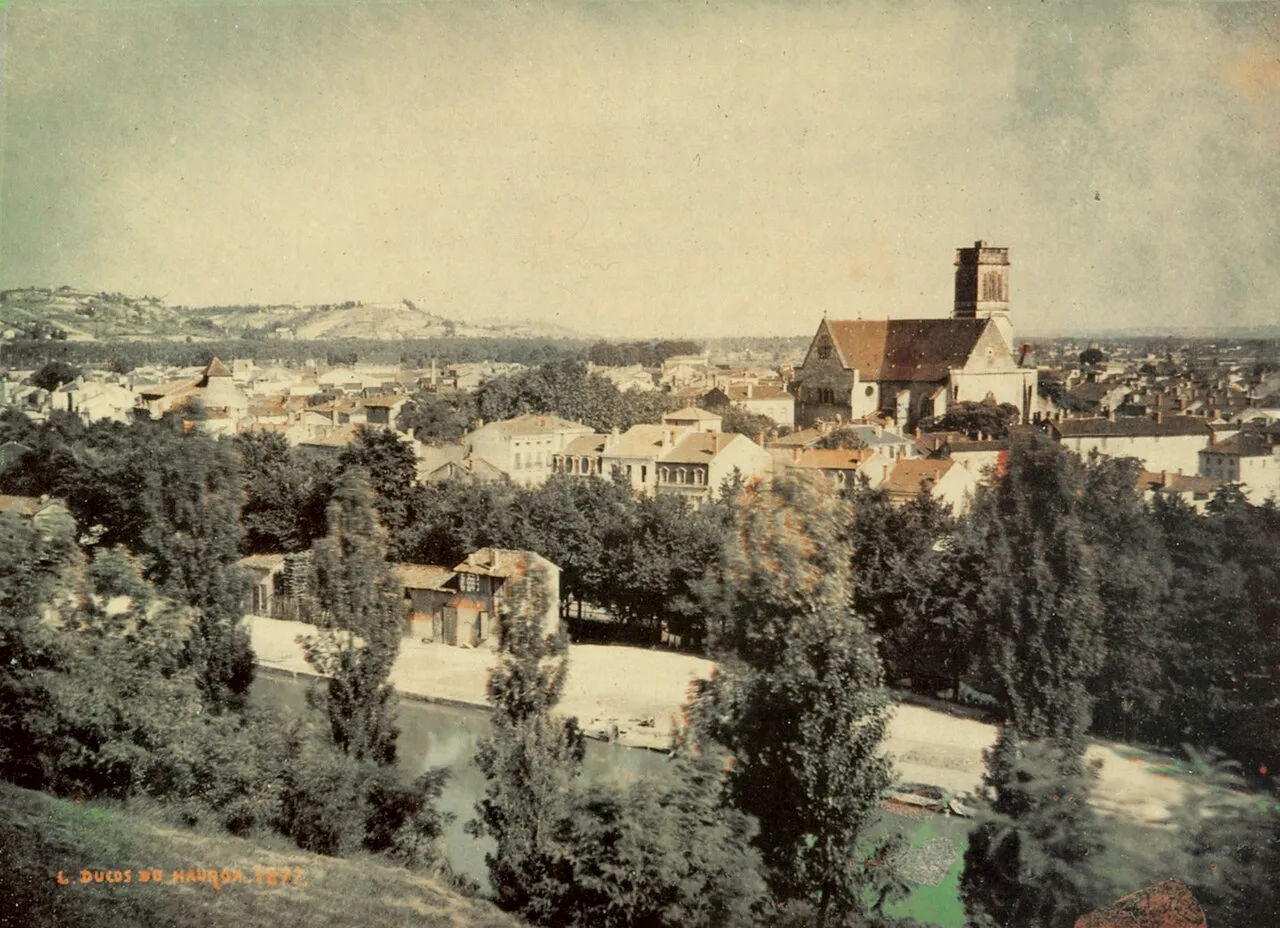
Louis Ducos du Hauron worked out the methods colour photography would use: three separation negatives, and prints in cyan, magenta and yellow that subtract colours from white.
How it began
Maxwell had shown in 1861 that three images, through red, green and blue filters, could recreate a colour scene by projecting coloured light. In 1868 the French inventor Louis Ducos du Hauron patented a set of methods for making colour pictures on paper, and published them in 1869. The poet and inventor Charles Cros reached the same idea at the same time.
How it works
Adding light starts from black; printing starts from white paper. So Ducos du Hauron printed each separation in the complementary colour: cyan absorbs red, magenta absorbs green, yellow absorbs blue. Stacked, the three layers subtract light from white to rebuild the colours.
Why it mattered
This subtractive scheme became the basis of colour printing, of Kodachrome and every colour film, and of the cyan, magenta and yellow inks in printers today. He also described the additive screen method used later by the autochrome.
Limits and what replaced it
The plates of the 1860s could barely record green and red, so his pictures needed very long exposures and were rare. Colour-sensitised emulsions made the methods practical decades later.
Today
Colour printing, colour film and inkjet printers all mix colour subtractively, as he proposed.