Kodachrome
1935 (16mm movie film); 1936 (35mm slides)
The first successful multilayer colour film: three black-and-white layers, each sensitive to one colour, turned into dyes during development. Its rich, long-lasting slides defined colour photography for decades.
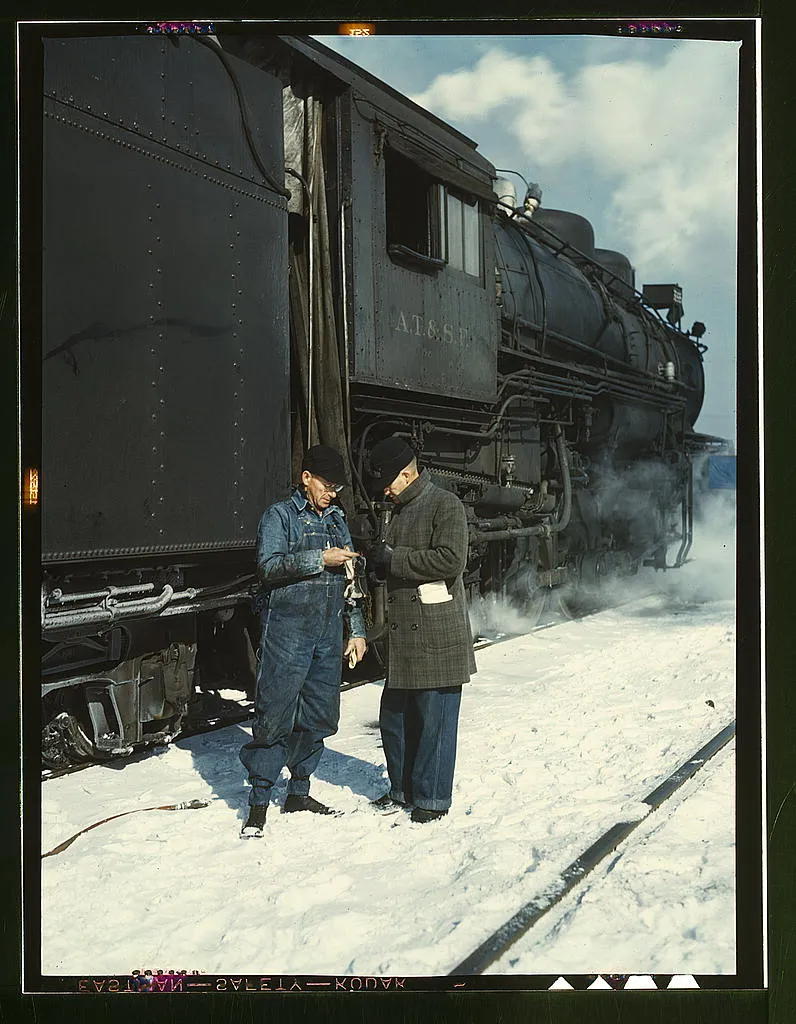
How it began
Leopold Godowsky Jr. and Leopold Mannes were classically trained musicians who experimented with colour film in their spare time. Kodak hired them, and in 1935 released their Kodachrome, first as movie film and from 1936 as 35mm slide film.
How it works
Kodachrome has three thin black-and-white layers stacked on the film, each sensitive to one third of the spectrum: blue, green and red. During a long and exacting development, cyan, magenta and yellow dyes were formed in the right layers in separate steps. Each dye absorbs one colour, so together they subtract from white light to recreate the scene: subtractive colour.
Why it mattered
Kodachrome was sharp, fine-grained and, stored in the dark, remarkably long-lasting. For half a century it was the film of National Geographic, travel slides and home movies. Its success established the multilayer design used by all later colour films.
Limits and what replaced it
It could only be processed in a few specialised labs. Agfacolor Neu (1936) put the dye-forming chemicals inside the film, so it was simpler to process, and colour negative and slide films that photographers could develop themselves replaced it. Digital photography ended it in 2009.
Today
Discontinued in 2009; the last lab stopped processing it at the end of 2010.