The Autochrome Lumière
1903 (patented); June 1907 (on sale)
A glass plate covered with millions of dyed potato-starch grains acted as a mosaic of tiny colour filters. It was the first practical colour photography, and its images glow like pointillist paintings.
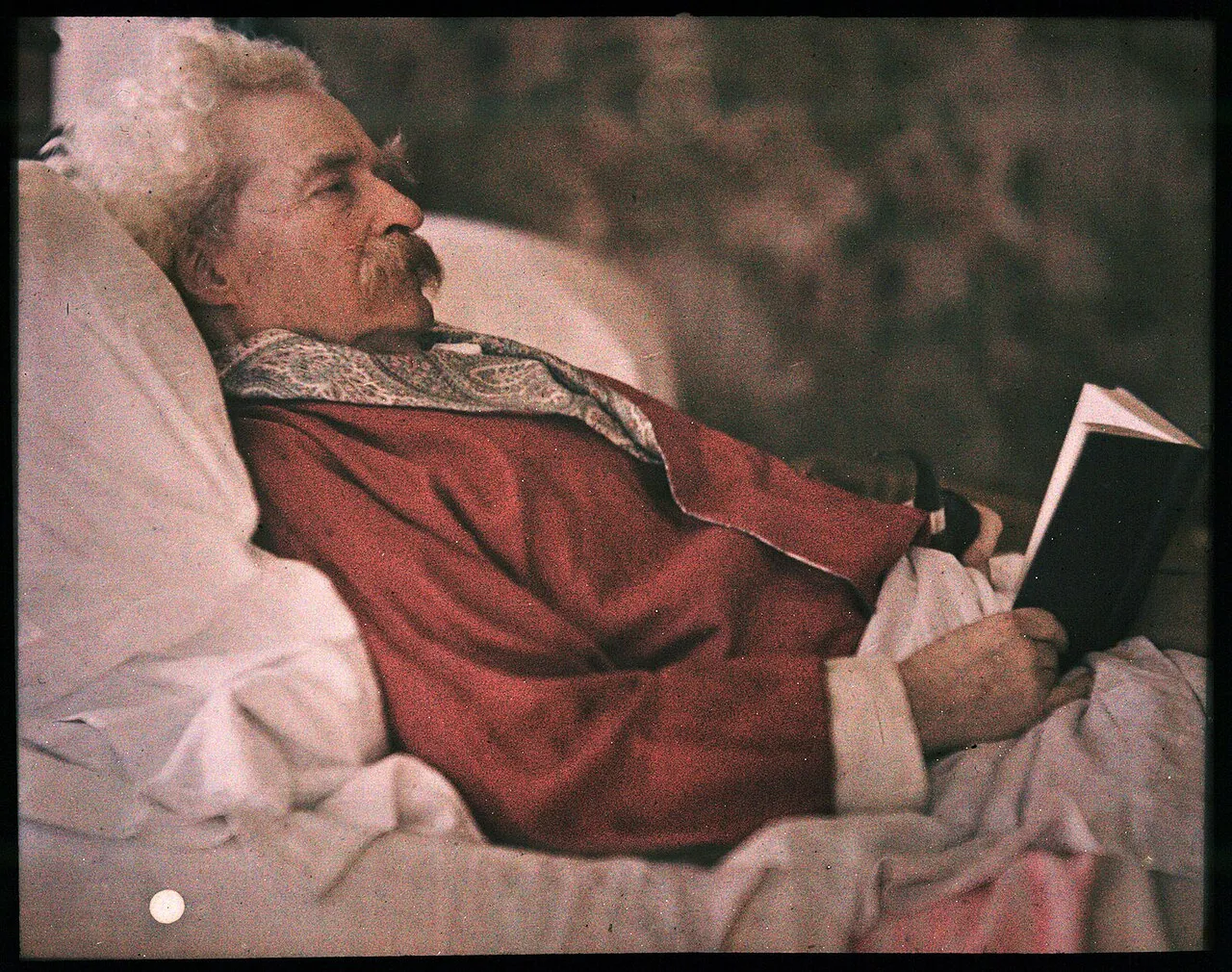
How it began
Auguste and Louis Lumière of Lyon, already famous for their Cinématographe, patented a colour process in 1903 and began selling it in 1907. It used a substance from the kitchen: potato starch.
How it works
Microscopic starch grains were dyed in three colours, mixed and dusted onto a sticky glass plate, and the gaps were filled with carbon black. Over this mosaic of tiny filters went a black-and-white emulsion sensitive to all colours. Each grain let through only its own colour of light, so behind each one the emulsion recorded how much of that colour was there. The plate was developed as a positive. Seen against the light through the same grains, it showed the colours by additive mixing.
Why it mattered
For the first time anyone could make a colour photograph with a single exposure in an ordinary camera. Photographers made soft, luminous portraits, gardens and scenes of the First World War. The principle, a mosaic of filters over a single light-sensitive layer, returned seventy years later as the Bayer filter on digital sensors.
Limits and what replaced it
Autochromes were slow, dense and hard to copy, and each one was a unique glass slide to be projected or viewed in a special viewer. Multilayer subtractive films such as Kodachrome (1935) were faster, sharper and easier to use.
Today
Autochromes are prized museum objects; the mosaic idea lives on in the colour filters on digital sensors.
Sources
- Wikipedia: Autochrome Lumière ↗
- Eder, ch. XCIV (p. 639): three-colour photography