Hypo fixer and the words of photography
1819 (hypo dissolves silver salts); 1839 (used to fix photographs)
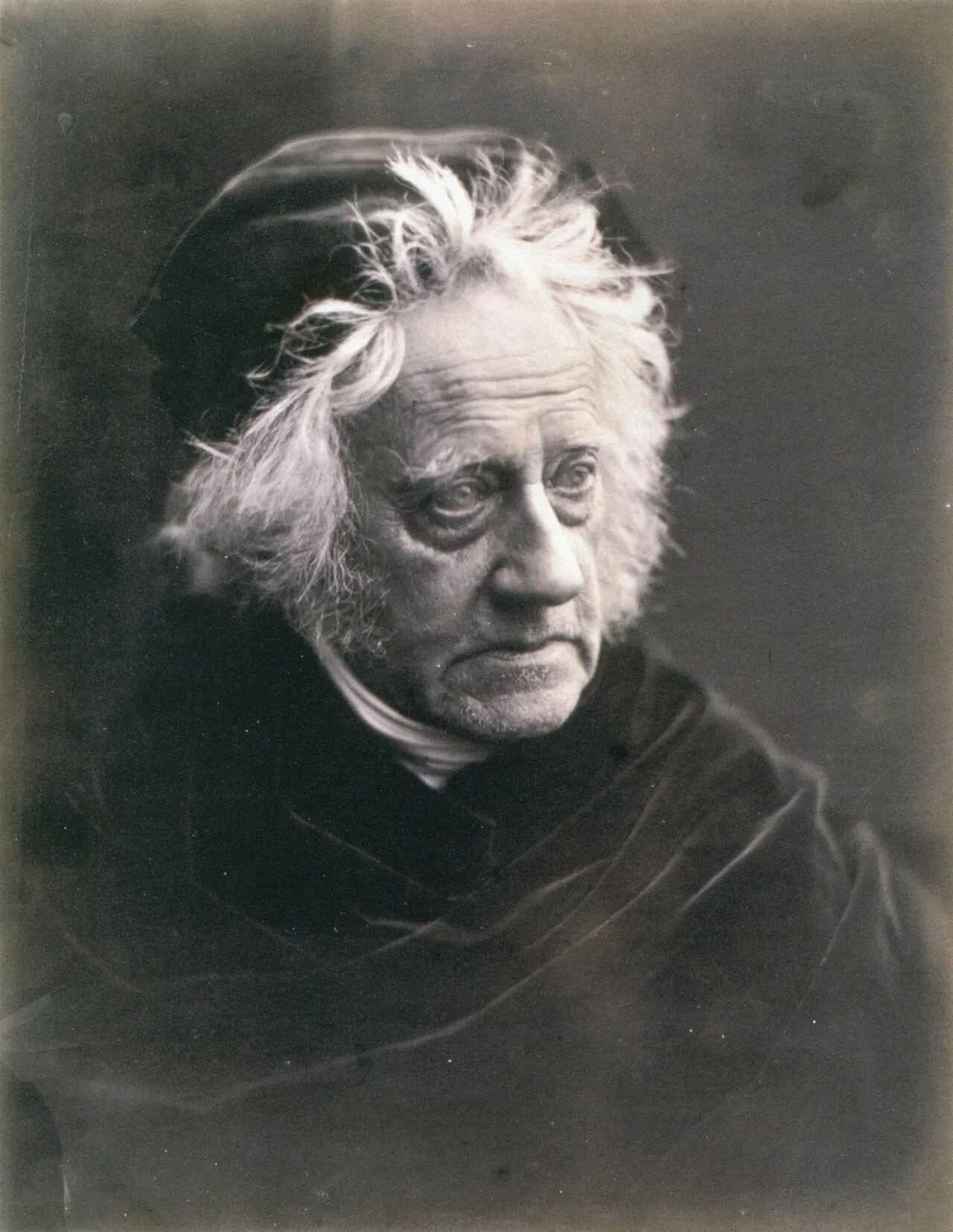
John Herschel found that sodium thiosulfate dissolves silver salts, and in 1839 used it to make photographs permanent. He also gave photography its words: photography, negative, positive.
How it began
In 1819 the scientist John Herschel reported that “hyposulphite of soda”, now called sodium thiosulfate, dissolves silver salts. Twenty years later, hearing of Daguerre’s and Talbot’s work, he made his own photographs within days. He fixed them with hypo, and told Talbot and others.
How it works
After exposure and development, a photograph still contains silver salts that light has not touched. In daylight they would slowly darken and swallow the image. A fixer turns these insoluble salts into soluble compounds that wash away, leaving only the image silver. Talbot had been using strong salt, which only partly stabilised the image; hypo removes the unexposed salts properly.
Why it mattered
Photographs became permanent. Daguerre adopted hypo too, and it has fixed nearly every silver photograph since. Herschel also coined the vocabulary: in 1839 he wrote of “photography”, and soon of “negative” and “positive” images. Later he used “snapshot”.
Limits and what replaced it
Prints that are not washed well enough to remove leftover hypo yellow and fade over decades. Faster ammonium thiosulfate “rapid fixers” came in the 20th century; the principle is unchanged.
Today
Sodium and ammonium thiosulfate fixers are still used for every roll of film and every darkroom print.
Sources
- Wikipedia: Sodium thiosulfate ↗
- Eder, ch. XXX (p. 258) on the first use of 'photography'