The Kodak Brownie
February 1900
A cardboard box camera that cost one dollar, sold with film at 15 cents a roll. Aimed at children, it made photography a hobby almost anyone could afford.
How it began
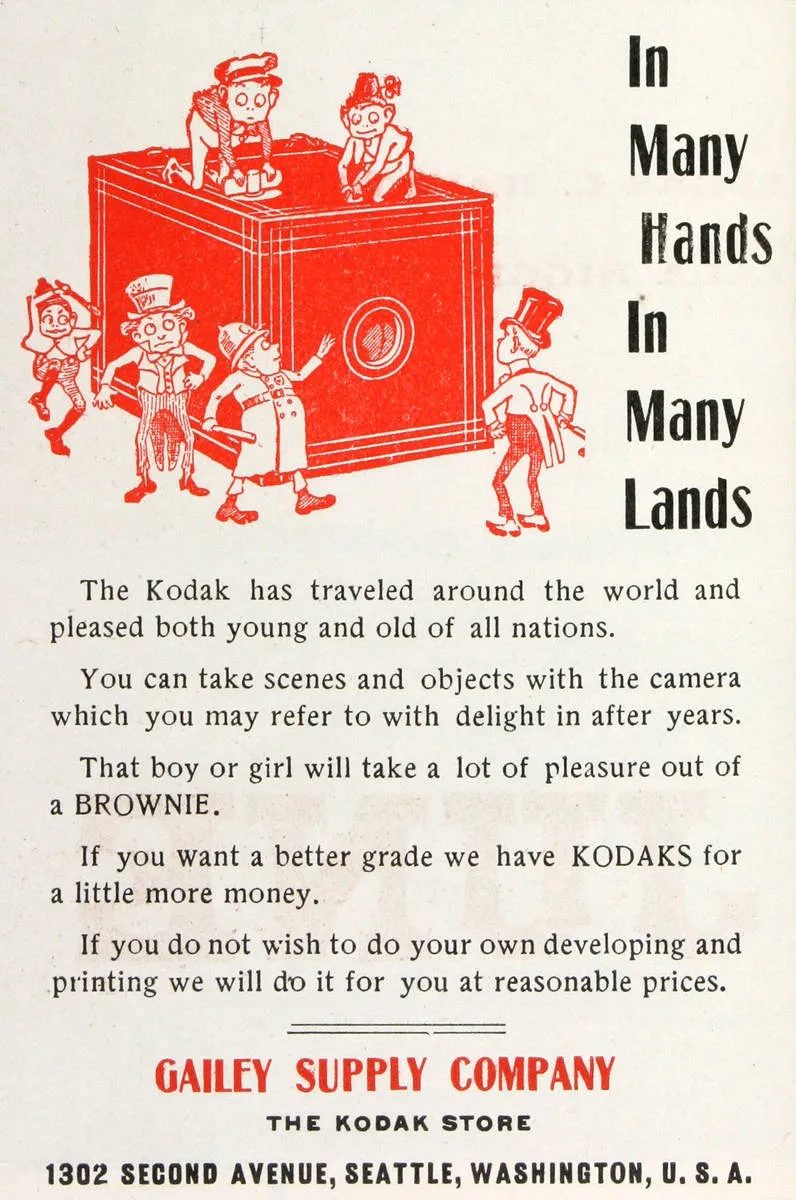
The Kodak of 1888 cost $25, a lot of money. In 1900 Kodak launched the Brownie, designed by Frank Brownell and named after popular cartoon characters, at one dollar. It was advertised to children, but adults bought it in huge numbers.
How it works
It was a cardboard box with a simple lens, a fixed aperture and a rotary shutter. The film was loaded in daylight, and the owner pointed, pressed and wound on, then sent the film for processing.
Why it mattered
Over 150,000 were sold in the first year. The Brownie turned photography into an everyday habit and created the family snapshot. Its successor, the Brownie No. 2 of 1901, introduced the 120 film still used today.
Limits and what replaced it
Fixed focus and a single shutter speed meant it needed bright light and still subjects. Folding cameras and, later, the instamatic offered more for little extra cost.
Today
Brownie models were made until the 1980s; the name stands for the start of mass snapshot photography.