The Zone System
1939–40 (Ansel Adams and Fred Archer)
A method for planning a black-and-white print from the moment of exposure, by dividing tones into eleven zones and adjusting exposure and development to place them.
How it began
Teaching at the Art Center School in Los Angeles around 1939–40, Ansel Adams and Fred Archer turned their working methods into a system that students could learn.
How it works
Tones are divided into eleven zones, from pure black (0) to pure white (X), each one stop apart. A light meter reading gives middle grey, Zone V. The photographer decides where a key shadow should fall and exposes for it, then lengthens or shortens development to move the highlights up or down.
Why it mattered
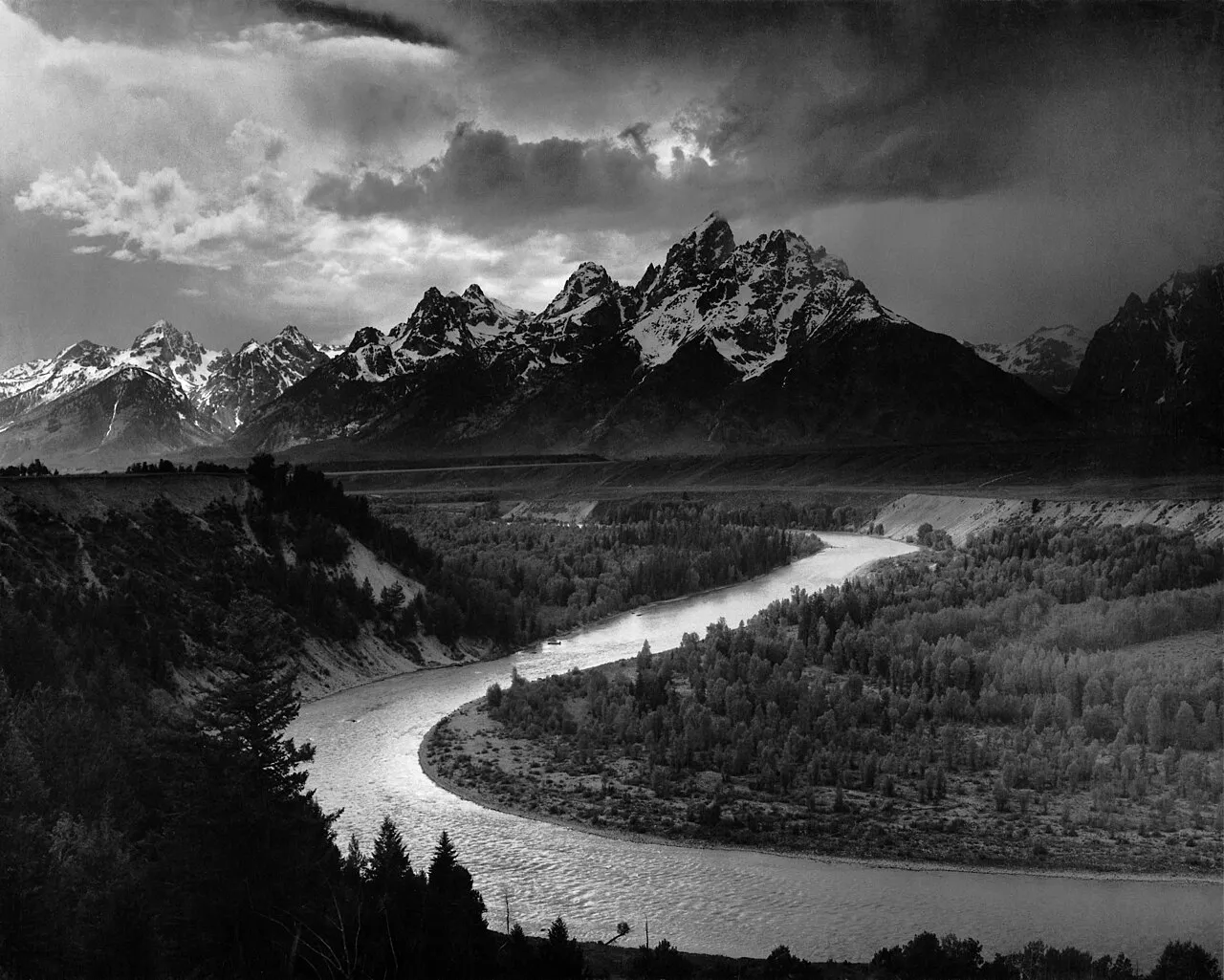
It gave photographers precise control of contrast, at the time of exposure, and a shared language for talking about tones. Adams’s landscapes made it famous.
Limits and what replaced it
It suits sheet film, where each negative can be developed separately. With roll film and digital, the same ideas survive as exposing for the highlights and reading a histogram.
Today
Still taught; its idea of exposing for the tones you want shapes how photographers think about dynamic range and exposing for highlights in digital.